Daily Skin Journal
Daily Skin Journal
Home > Skin Health
9 Things Nobody Tells You About Eczema (And Why Traditional Treatment Keeps Failing)
When traditional dermatology keeps failing, where do eczema sufferers turn? We investigated a personalized assessment approach called eczemap™ that's gaining attention in the eczema community—and the results surprised us.
By Sarah Mitchell, Daily Skin Journal | Investigative Health Report | Sponsored Content
If standard approaches haven't worked—or if your skin has looked "off" for months or years—here's what people with similar experiences wish they'd known sooner when they took this free 30 second professional-grade assessment.
Your "Gentle" Soap Is Making Everything Worse
The lie we've all been sold: "Use gentle, fragrance-free soap and your eczema will improve."
The truth: Even "gentle" soaps destroy your skin barrier.
Here's what's happening:
Most soaps—even ones marketed as "sensitive skin" or "eczema-friendly"—use surfactants that strip away your skin's protective lipid layer. This layer is your first defense against bacteria, allergens, and moisture loss.
When you wash with these soaps, you're literally removing the barrier your skin desperately needs to heal.
What actually works:
Therapeutic cleansing bars specifically formulated to cleanse WITHOUT stripping natural oils. They use different surfactant systems that remove dirt and bacteria while preserving your barrier.
The EczeMap assessment (a free 30-second quiz that analyzes your specific situation) actually factors in your current cleansing routine and recommends barrier-preserving options if that's contributing to your flares.
One woman I interviewed, Sarah, 32, told me: "I was using Dove Sensitive. It's supposed to be the GENTLEST. When I switched to a therapeutic bar recommended through the assessment, my skin calmed down within a week. A week. After two years of nothing working."
The takeaway: Your first step in eczema care might be causing your biggest problem.


Steroids Are A Band-Aid On A Bullet Wound
The standard approach: Dermatologist diagnoses eczema → prescribes steroid cream → repeat when it comes back.
Why this fails: Steroids only address ONE of the three problems causing your eczema.
Let me break this down:
Your eczema has three components:
Bacterial overgrowth (especially Staph aureus fueling inflammation)
Chronic inflammation (what steroids address)
Compromised barrier (allowing triggers in and moisture out)
Steroids suppress inflammation temporarily. But they do NOTHING about the bacteria. And they can actually thin your skin barrier over time, making the third problem worse.
This is why you get the same pattern every time:
Use steroid cream → inflammation calms
Stop using it → bacteria still there, barrier still damaged
Inflammation returns, often worse → use more steroids
Repeat forever
What actually works:
Addressing all three problems simultaneously with a coordinated system:
Antimicrobial ingredients (colloidal silver, tea tree oil, HOCl)
Anti-inflammatory components (botanical actives, emu oil, allantoin)
Barrier repair (oils and vitamins that strengthen your protective layer)
This is exactly what the EczeMap assessment recommends based on your specific situation—a multi-pronged approach instead of steroid-only treatment.
Marcus, 29, told me: "I was on prescription steroids for six years. SIX YEARS. The assessment showed I needed antimicrobial treatment, not stronger steroids. Three months later, my skin is clearer than it's been in a decade. And I'm not dependent on prescriptions anymore."
The takeaway: If steroids keep failing you, the problem isn't that you need stronger steroids. The problem is you're only treating one-third of the issue.
The Bacteria On Your Skin Are Winning (And You're Helping Them)
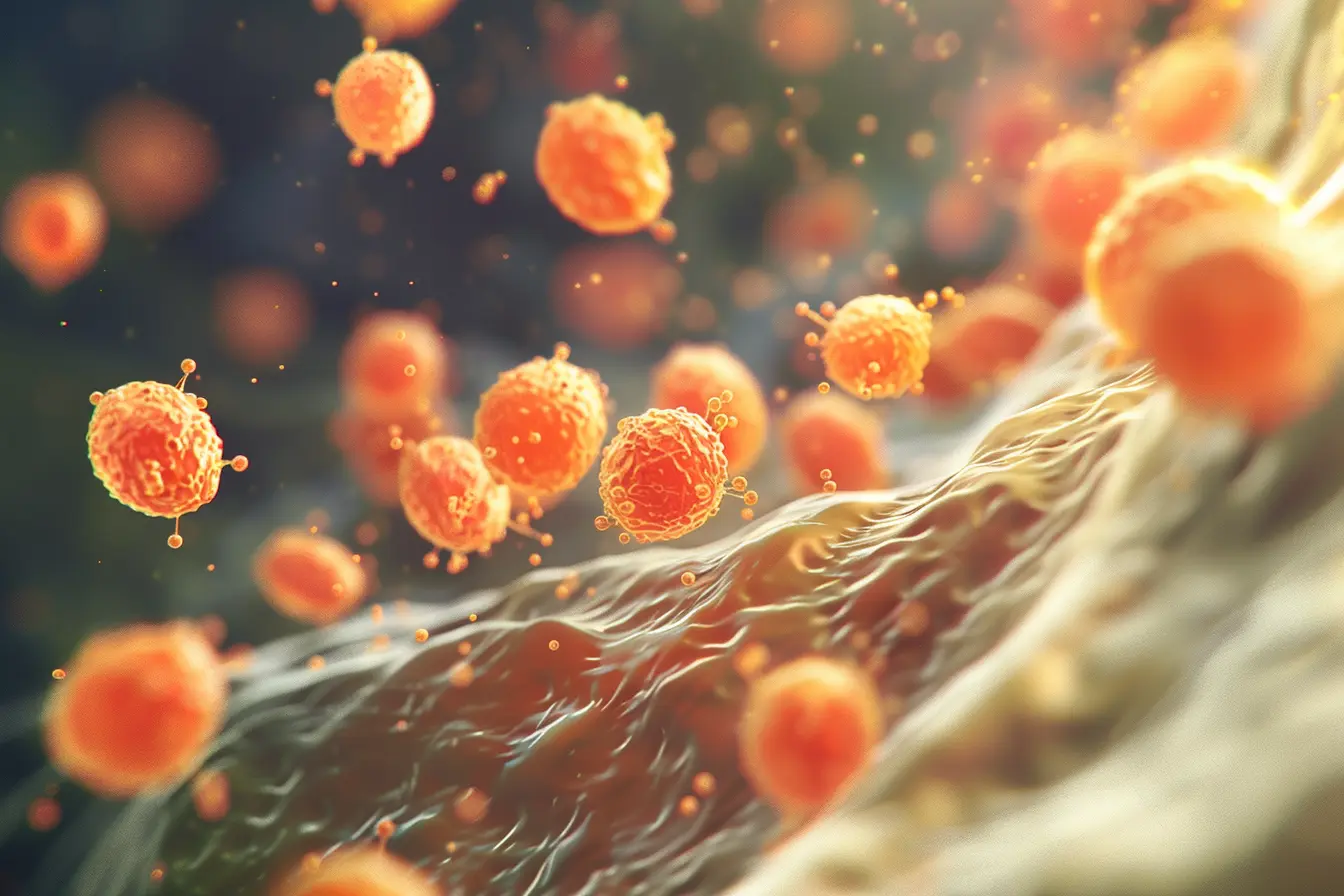
What you probably don't know: Your eczema-prone skin has up to 1,000 times more Staphylococcus aureus bacteria than healthy skin.
This isn't just correlation. The bacteria are actively making your eczema worse.
Here's how:
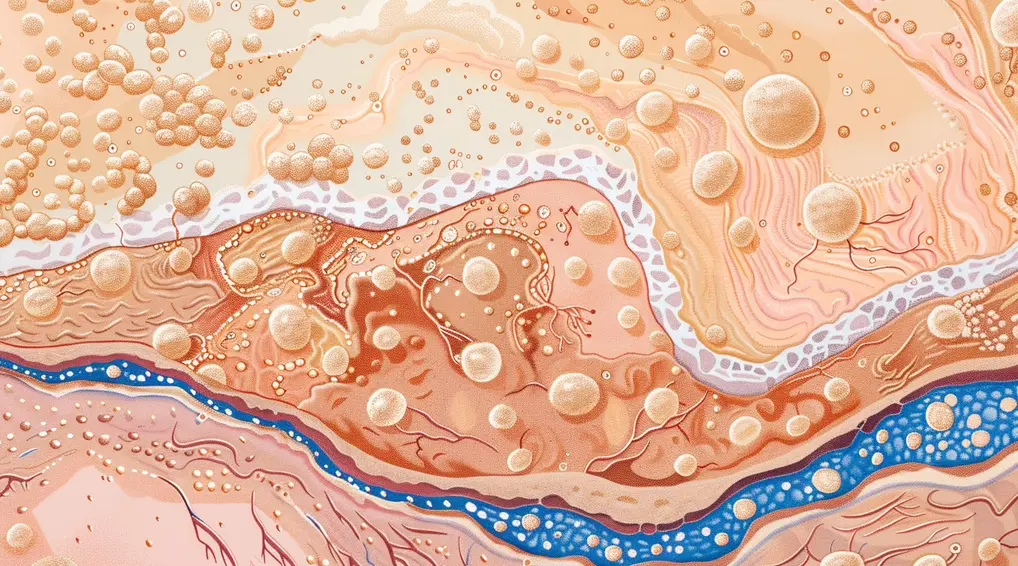
Staph aureus produces toxins that trigger inflammatory responses. Your immune system attacks. Your skin gets more inflamed. The barrier gets more damaged. More bacteria colonize. The cycle intensifies.
But here's the part that made my jaw drop:
Every time you scratch, you're spreading bacteria to new areas.
Every time you use steroid cream without addressing bacteria, you're suppressing the immune response that's trying (ineffectively) to fight the infection.
Every time you moisturize over bacteria-laden skin, you're creating a warm, moist environment where bacteria thrive.
You're accidentally creating the perfect bacterial breeding ground.
Sweat, friction, allergens, and stress keep re-triggering flares. Without protection between treatment applications, the cycle continues indefinitely.
Most treatments address ONE of these problems. EczeMap's approach is to address all three simultaneously with a coordinated system. That's why people see results when single products have failed.
Your Eczema Location Matters More Than You Think
The myth: Eczema is eczema. Treat it the same way everywhere.
The reality: Eczema on your hands needs a completely different approach than eczema on your face.
This seems obvious when you say it out loud, but most treatment approaches ignore it completely.
Here's why location matters:
Hand eczema: Exposed to constant washing, friction, chemicals. Needs fast-absorbing treatment that can withstand exposure. Requires frequent reapplication throughout the day.
Facial eczema: Thin, sensitive skin. Can't tolerate heavy ointments. Needs to work under makeup. Requires extra gentleness and non-comedogenic formulas.
Body/limb eczema: Larger surface area. Often triggered by sweat and clothing friction. Benefits from protective barrier that prevents mechanical irritation.
Scalp eczema: Difficult to access. Complicated by hair. Needs non-greasy solutions that won't make hair oily.
Behind knees/inner elbows: Flexural areas with skin-on-skin contact. Sweat and friction triggers. Prone to bacterial overgrowth in folds.
One-size-fits-all treatment fails because it doesn't account for these vastly different environments.
What actually works:
Location-specific protocols that consider the unique challenges of each area.
This is one of the most impressive aspects of the EczeMap assessment—it asks specifically where your eczema is located and tailors the recommendation accordingly.
For example, if you have hand eczema, it might recommend a fast-absorbing ointment plus a portable spray you can use after washing hands at work.
If you have facial eczema, it might recommend gentler formulations that won't clog pores or interfere with your skincare routine.
David, 37, told me: "I'd been using the same heavy ointment my dermatologist prescribed for my hands on my face. It was causing breakouts, which made everything worse. The assessment gave me different formulations for different areas. Game changer."
The takeaway: Where your eczema appears should dictate how you treat it. Generic approaches ignore this critical factor.
You're Probably Triggering Flares Without Knowing It
Common belief: "My eczema just randomly flares up for no reason."
Actual truth: There's always a reason. You just haven't identified the pattern yet.
Through my interviews, I discovered that most eczema sufferers don't track their flares systematically. They remember the obvious triggers (like eating dairy if they have food sensitivities), but miss the subtle, consistent patterns.
Hidden triggers people discover through tracking:
Stress timing: Flares appear 2-3 days AFTER stressful events, not during (so you don't connect them)
Weather changes: Not just winter dryness, but barometric pressure shifts before storms
Hormonal cycles: Flares that align with menstrual cycles in women
Sleep quality: Poor sleep nights consistently followed by worse eczema
Exercise timing: Sweat is a trigger, but when you shower afterward matters too
Fabric friction: Certain clothing materials rubbing against specific areas
Product ingredients: Not just fragrances—specific preservatives or emulsifiers you're sensitive to
What actually works:
The EczeMap assessment includes trigger identification questions that help you recognize patterns you might have missed.
The Itch-Scratch Cycle Is A Trap (And Willpower Won't Free You)
The Itch-Scratch Cycle Is A Trap (And Willpower Won't Free You)
What everyone says: "Just don't scratch."
Why that's useless advice: The itch-scratch cycle is a physiological trap, not a willpower problem.
Here's what's actually happening:
Eczema causes inflammation
Inflammation causes itch
Scratching releases histamines
Histamines cause MORE itch
More scratching damages skin further
Damaged skin gets more inflamed
Return to step 1, repeat forever
You cannot willpower your way out of this cycle. The histamine release from scratching creates a genuine biochemical craving to scratch more.
What actually works:
Breaking the cycle requires eliminating the itch at its source, not just resisting the urge to scratch.
This means:
Antimicrobial treatment (bacteria produce itch-causing toxins)
Fast-acting itch relief that works within hours, not days
Barrier protection that prevents new triggers from starting the cycle again
Nighttime-specific strategies for unconscious scratching
The EczeMap assessment specifically asks about your itch severity and scratching patterns because this determines how aggressive the anti-itch protocol needs to be.
Clinical studies on HOCl show it reduces itch within 72 hours by addressing the bacterial component. Combined with barrier-repairing ointments, users report breaking the scratch cycle within 1-2 weeks.
The takeaway: If you're still itching and scratching, you haven't addressed the root cause. Willpower and cotton gloves aren't enough.

"Moisturize More" Is Incomplete Advice
Standard recommendation: "Keep your skin moisturized and your eczema will improve."
What they're not telling you: Not all moisturizers are created equal, and timing matters more than frequency.
Here's what that means:
Your skin barrier is like a brick wall. The skin cells are the bricks. The lipids (fats) between them are the mortar.
In eczema, the mortar is damaged. There are gaps. These gaps let moisture out and irritants in.
Occlusives (like petroleum jelly) sit on top and slow water loss, but don't repair the mortar.
Humectants (like hyaluronic acid) pull water into skin, but without fixing the barrier, that water just escapes again.
Barrier repair ingredients (ceramides, essential fatty acids, cholesterol in specific ratios) actually rebuild the mortar.
Most drugstore moisturizers are primarily occlusives and humectants. They temporarily mask dryness but don't repair barrier function.
What actually works:
Formulations specifically designed for barrier repair, applied at the right time in your routine.
Home > Skin Health
9 Things Nobody Tells You About Eczema (And Why Traditional Treatment Keeps Failing)
When traditional dermatology keeps failing, where do eczema sufferers turn? We investigated a personalized assessment approach called eczemap™ that's gaining attention in the eczema community—and the results surprised us.
By Sarah Mitchell, Daily Skin Journal | Investigative Health Report | Sponsored Content
If standard approaches haven't worked—or if your skin has looked "off" for months or years—here's what people with similar experiences wish they'd known sooner when they took this free 30 second professional-grade assessment.
Your "Gentle" Soap Is Making Everything Worse
The lie we've all been sold: "Use gentle, fragrance-free soap and your eczema will improve."
The truth: Even "gentle" soaps destroy your skin barrier.
What actually works:
Therapeutic cleansing bars specifically formulated to cleanse WITHOUT stripping natural oils. They use different surfactant systems that remove dirt and bacteria while preserving your barrier.
The EczeMap assessment (a free 30-second quiz that analyzes your specific situation) actually factors in your current cleansing routine and recommends barrier-preserving options if that's contributing to your flares.
One woman I interviewed, Sarah, 32, told me: "I was using Dove Sensitive. It's supposed to be the GENTLEST. When I switched to a therapeutic bar recommended through the assessment, my skin calmed down within a week. A week. After two years of nothing working."
The takeaway: Your first step in eczema care might be causing your biggest problem.
Steroids Are A Band-Aid On A Bullet Wound.
The standard approach: Dermatologist diagnoses eczema → prescribes steroid cream → repeat when it comes back.
Why this fails: Steroids only address ONE of the three problems causing your eczema.
What actually works:
Addressing all three problems simultaneously with a coordinated system:
Antimicrobial ingredients (colloidal silver, tea tree oil, HOCl)
Anti-inflammatory components (botanical actives, emu oil, allantoin)
Barrier repair (oils and vitamins that strengthen your protective layer)
This is exactly what the EczeMap assessment recommends based on your specific situation—a multi-pronged approach instead of steroid-only treatment.
Marcus, 29, told me: "I was on prescription steroids for six years. SIX YEARS. The assessment showed I needed antimicrobial treatment, not stronger steroids. Three months later, my skin is clearer than it's been in a decade. And I'm not dependent on prescriptions anymore."
The takeaway: If steroids keep failing you, the problem isn't that you need stronger steroids. The problem is you're only treating one-third of the issue.
The Bacteria On Your Skin Are Winning. (And You're Helping Them)
What you probably don't know: Your eczema-prone skin has up to 1,000 times more Staphylococcus aureus bacteria than healthy skin.
This isn't just correlation. The bacteria are actively making your eczema worse.
Here's how:
Staph aureus produces toxins that trigger inflammatory responses. Your immune system attacks. Your skin gets more inflamed. The barrier gets more damaged. More bacteria colonize. The cycle intensifies.
But here's the part that made my jaw drop:
Every time you scratch, you're spreading bacteria to new areas.
Every time you use steroid cream without addressing bacteria, you're suppressing the immune response that's trying (ineffectively) to fight the infection.
Every time you moisturize over bacteria-laden skin, you're creating a warm, moist environment where bacteria thrive.
You're accidentally creating the perfect bacterial breeding ground.
Sweat, friction, allergens, and stress keep re-triggering flares. Without protection between treatment applications, the cycle continues indefinitely.
Most treatments address ONE of these problems. EczeMap's approach is to address all three simultaneously with a coordinated system. That's why people see results when single products have failed.

Your Eczema Location Matters More Than You Think.
The myth: Eczema is eczema. Treat it the same way everywhere.
The reality: Eczema on your hands needs a completely different approach than eczema on your face.
This seems obvious when you say it out loud, but most treatment approaches ignore it completely.
Here's why location matters:
Hand eczema: Exposed to constant washing, friction, chemicals. Needs fast-absorbing treatment that can withstand exposure. Requires frequent reapplication throughout the day.
Facial eczema: Thin, sensitive skin. Can't tolerate heavy ointments. Needs to work under makeup. Requires extra gentleness and non-comedogenic formulas.
Body/limb eczema: Larger surface area. Often triggered by sweat and clothing friction. Benefits from protective barrier that prevents mechanical irritation.
Scalp eczema: Difficult to access. Complicated by hair. Needs non-greasy solutions that won't make hair oily.
Behind knees/inner elbows: Flexural areas with skin-on-skin contact. Sweat and friction triggers. Prone to bacterial overgrowth in folds.
One-size-fits-all treatment fails because it doesn't account for these vastly different environments.
You're Probably Triggering Flares Without Knowing It
Common belief: "My eczema just randomly flares up for no reason."
Actual truth: There's always a reason. You just haven't identified the pattern yet.
Through my interviews, I discovered that most eczema sufferers don't track their flares systematically. They remember the obvious triggers (like eating dairy if they have food sensitivities), but miss the subtle, consistent patterns.
Hidden triggers people discover through tracking:
Stress timing: Flares appear 2-3 days AFTER stressful events, not during (so you don't connect them)
Weather changes: Not just winter dryness, but barometric pressure shifts before storms
Hormonal cycles: Flares that align with menstrual cycles in women
Sleep quality: Poor sleep nights consistently followed by worse eczema
Exercise timing: Sweat is a trigger, but when you shower afterward matters too
Fabric friction: Certain clothing materials rubbing against specific areas
Product ingredients: Not just fragrances—specific preservatives or emulsifiers you're sensitive to
What actually works:
The EczeMap assessment includes trigger identification questions that help you recognize patterns you might have missed.
The Itch-Scratch Cycle Is A Trap (And Willpower Won't Free You)
What everyone says: "Just don't scratch."
Why that's useless advice: The itch-scratch cycle is a physiological trap, not a willpower problem.
Here's what's actually happening:
Eczema causes inflammation
Inflammation causes itch
Scratching releases histamines
Histamines cause MORE itch
More scratching damages skin further
Damaged skin gets more inflamed
Return to step 1, repeat forever
You cannot willpower your way out of this cycle. The histamine release from scratching creates a genuine biochemical craving to scratch more.
What actually works:
Breaking the cycle requires eliminating the itch at its source, not just resisting the urge to scratch.
This means:
Antimicrobial treatment (bacteria produce itch-causing toxins)
Fast-acting itch relief that works within hours, not days
Barrier protection that prevents new triggers from starting the cycle again
Nighttime-specific strategies for unconscious scratching
The EczeMap assessment specifically asks about your itch severity and scratching patterns because this determines how aggressive the anti-itch protocol needs to be.
Clinical studies on HOCl show it reduces itch within 72 hours by addressing the bacterial component. Combined with barrier-repairing ointments, users report breaking the scratch cycle within 1-2 weeks.
The takeaway: If you're still itching and scratching, you haven't addressed the root cause. Willpower and cotton gloves aren't enough.
"Moisturize More" Is Incomplete Advice.
Standard recommendation: "Keep your skin moisturized and your eczema will improve."
What they're not telling you: Not all moisturizers are created equal, and timing matters more than frequency.
Here's what that means:
Your skin barrier is like a brick wall. The skin cells are the bricks. The lipids (fats) between them are the mortar.
In eczema, the mortar is damaged. There are gaps. These gaps let moisture out and irritants in.
Occlusives (like petroleum jelly) sit on top and slow water loss, but don't repair the mortar.
Humectants (like hyaluronic acid) pull water into skin, but without fixing the barrier, that water just escapes again.
Barrier repair ingredients (ceramides, essential fatty acids, cholesterol in specific ratios) actually rebuild the mortar.
Most drugstore moisturizers are primarily occlusives and humectants. They temporarily mask dryness but don't repair barrier function.
What actually works:
Formulations specifically designed for barrier repair, applied at the right time in your routine.
Your Eczema Has Different Phases (And They Need Different Treatments)
The EczeMap assessment considers your current moisturizing routine and recommends barrier-repairing formulations if that's what's missing.
The timing matters too: applying treatment to damp skin (within 3 minutes of washing) dramatically improves absorption and effectiveness.
Robert, 45, said: "I was moisturizing religiously. Three times a day with expensive lotion. My derm said I was doing everything right. But the assessment showed I was using the wrong TYPE of moisturizer at the wrong TIME. Switching to barrier-repair ingredients applied right after cleansing made a massive difference within two weeks."
The takeaway: "Moisturize more" is useless advice without specifying WHAT to use and WHEN to apply it.

The "30-Day Guarantee" Most Doctors Won't Give You.
The reality of traditional treatment: You can spend months or years trying different prescriptions with no guarantee any will work.
Think about the typical dermatology experience:
Appointment 1: Try this steroid cream for 2-4 weeks
Appointment 2: That didn't work? Try this stronger one for 2-4 weeks
Appointment 3: Still not working? Let's try this other approach for 2-4 weeks
Appointment 4: ...
Six months later, you've spent $500+ on copays and prescriptions, and you're no better off.
No dermatologist ever says: "If this doesn't work in 30 days, I'll refund all your copays and prescription costs."
What actually works:
Companies confident enough in their approach to guarantee results.
The EczeMap-recommended protocols come with a 30-day money-back guarantee. If you don't see improvement, you get a full refund.
This changes the entire risk calculation.
With traditional treatment, you're gambling time and money with no recourse if it fails.
With guaranteed protocols, you're testing with a safety net.
Brian, 31, told me: "I'd wasted $800 on products that didn't work. When I saw the assessment kit had a guarantee, that's what convinced me to try. If it didn't work, I'd get my money back. That removed the risk. And obviously, it worked, so I didn't need the refund."
The takeaway: If a treatment approach works consistently, the company should be willing to guarantee it. If they won't, that tells you something.

Keisha, 28, teacher in Chicago:
"My daughter is three. She's had eczema since
she was six months old. The pediatrician said
she'd 'grow out of it.' She didn't.
By age two, the patches on her legs and arms
were so bad that other kids at daycare were
asking questions. She started trying to hide her
skin even at that age.
I took the assessment because I was desperate and it was free. The personalized plan included gentler cleansing than I'd been using (I didn't
know regular baby soap was making things worse) plus a treatment designed for toddler-sensitive
skin.
The change was gradual but steady. Less scratching within days. Visible healing within two weeks. By month two, she was wearing shorts and short sleeves without me having to coax her.
She's four now. Still on the maintenance routine.
But she's not hiding anymore. And that's everything."
What the Assessment Provides:
✔️ Severity classification (mild/moderate/severe/extreme)
✔️ Customized approach recommendations based on YOUR specific situation
✔️ Realistic timeline expectations (not generic promises)
✔️ If you qualify: up to 52% off solutions designed for your severity level

The economics: Why the discount matters.
One thing I heard repeatedly: the 52% discount was crucial to people actually trying the system.
Here's why:
The exhaustion of failed purchases:
Every parent and adult with eczema I spoke to had spent hundreds—sometimes thousands—on products that didn't work. Drugstore creams. Prescription copays. "Natural" solutions. Special detergents. Elimination diets.
By the time they found EczeMap, they were financially and emotionally tapped out.
Amanda told me: "I'd spent over $800 in one year on products that did nothing. When I saw the price of the full kit, I almost didn't try it. But the 52% discount meant I was spending less than I'd spent on two failed prescription creams. And the guarantee meant if it didn't work, I'd get my money back."
eczemap™ 🔎
Take the free eczemap™ assessment

Step 1: Go to the EczeMap assessment page (link below)
Step 2: Answer ten quick questions honestly about your specific situation
Step 3: Review your personalized results and see if you qualify for the discount
Step 4: If the recommended protocol makes sense for your situation, you can try it risk-free with the guarantee
Step 5: Follow the routine consistently for at least 4-6 weeks (this is key—eczema healing takes time)
The entire assessment takes less than a minute. But it might be the minute that changes your relationship with eczema.
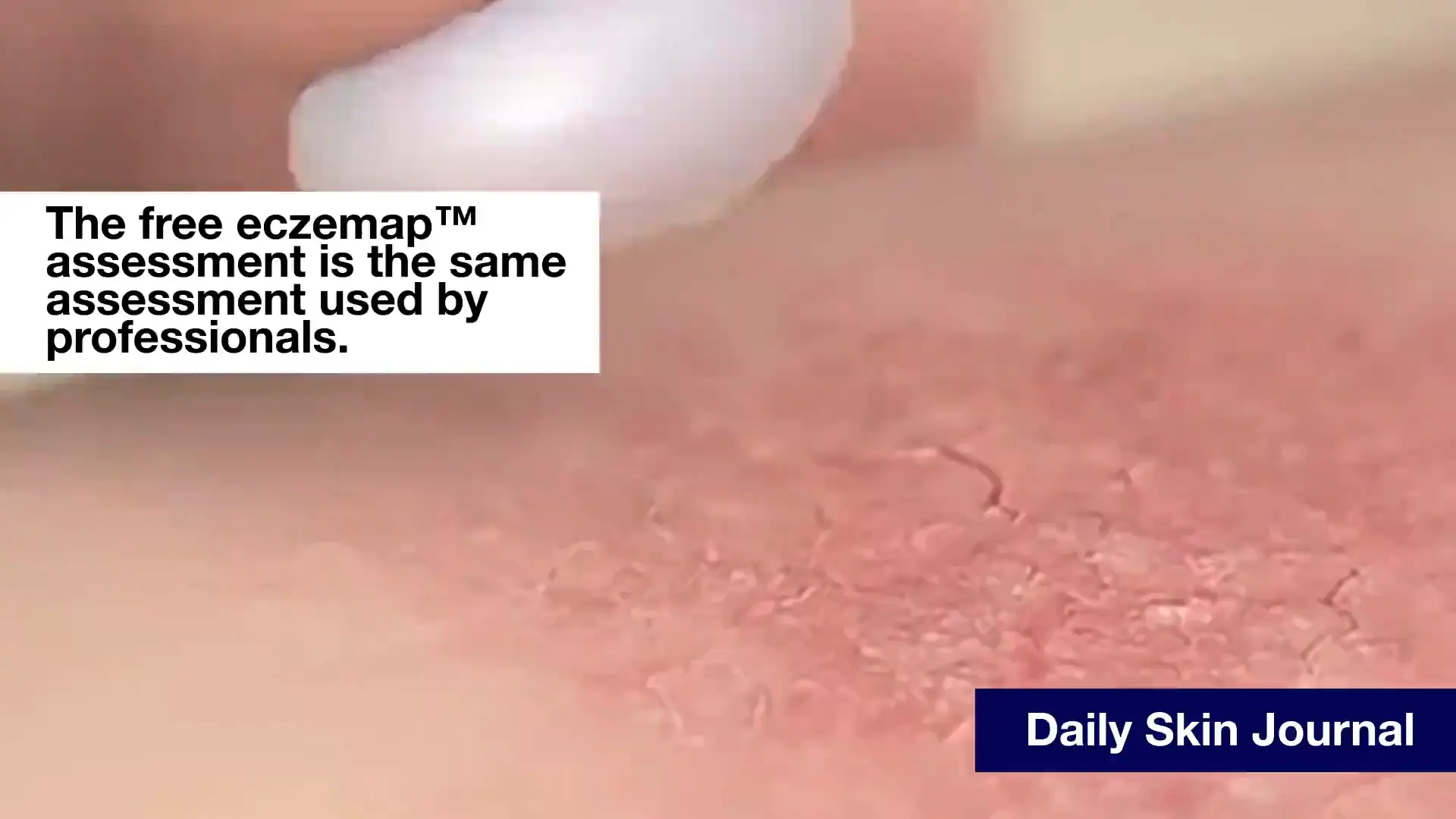
Start your eczemap™ assessment. Click which image looks closest to your skin to start →
This helps us understand if your skin follows a classic pattern or is mixing a few different ones.
This is a structured appearance evaluation, not a medical diagnosis. For persistent health concerns, consult a healthcare professional.
Q: I've had this for 5+ years. Is it even possible to improve severe cases?
Yes, but it requires the right approach for your severity level. Mild-case solutions won't work. The eczemap assessment identifies whether your situation is severe/chronic and recommends approaches specifically designed for stubborn, long-standing concerns. Results vary and take longer (typically 6-12 months for severe cases).
Q: How is this different from what I've already tried?
Most people with severe cases have tried products designed for mild, early-stage concerns. The eczemap assessment matches you with solutions appropriate for YOUR severity level—including professional-grade formulas for stubborn cases.
Q: Will this work if prescriptions didn't?
Every situation is different. What we know is that many people with severe cases found appearance and comfort improvement with targeted, non-prescription approaches after other methods failed. The assessment helps identify whether your specific situation might benefit from these alternatives. Always consult a healthcare professional about your options.
Q: What if I have extremely thick, dark skin that has severe cracks?
That's classified as a severe/chronic concern. The eczemap assessment will identify this and recommend approaches specifically designed for extreme cases—not generic solutions. These cases take longer, but people do see improvement with the right consistent approach.
Q: Is there a guarantee?
Yes. all solutions comes with a 30-day guarantee. If you don't see appearance or comfort improvement appropriate for your severity level, you can return it. No risk.
Your Next Step (If You've Tried Everything Else)
If you're reading this with thick, dark, crumbling skin that have resisted every standard approach—if you've dealt with this for years and you're tired of hiding—the eczemap assessment is your starting point.
It's not another random product recommendation. It's an industry-standard evaluation that identifies your specific severity level and matches you with approaches designed for stubborn cases.
Plus, if you qualify based on your assessment results, you'll receive up to 52% off.
Take 30 seconds. Get real answers. Stop guessing.
Private. Professional-grade. Designed specifically for people who've already tried the "easy" solutions.
Daily Skin Journal
References:
[1] Fukuyama T, Ehling S, Cook L, Bäumer W. Topically Administered Hypochlorous Acid Improves Clinical Signs and Itch in Atopic Dermatitis. J Drugs Dermatol. 2019;18(11):1143-1149.
[2] Kong HH, Oh J, Deming C, et al. Temporal Shifts in the Skin Microbiome Associated with Disease Flares in Atopic Dermatitis. Genome Res. 2012;22(5):850-859.
[3] Huang JT, Abrams M, Tlougan B, et al. Treatment of Staphylococcus aureus Colonization in Atopic Dermatitis Decreases Disease Severity. Pediatrics. 2009;123(5):e808-e814.
[4] Elias PM, Schmuth M. Abnormal Skin Barrier in the Etiopathogenesis of Atopic Dermatitis. Curr Opin Allergy Clin Immunol. 2009;9(5):437-446.
[5] Simpson EL, Chalmers JR, Hanifin JM, et al. Emollient Enhancement of the Skin Barrier Offers Effective Atopic Dermatitis Prevention. J Allergy Clin Immunol. 2014;134(4):818-823.
[6] Hengge UR, Ruzicka T, Schwartz RA, Cork MJ. Adverse Effects of Topical Glucocorticosteroids. J Am Acad Dermatol. 2006;54(1):1-15.
[7] Yosipovitch G, Papoiu AD. What Causes Itch in Atopic Dermatitis? Curr Allergy Asthma Rep. 2008;8(4):306-311.
[8] Thyssen JP, Kezic S. Causes of Epidermal Filaggrin Reduction in Atopic Dermatitis. J Allergy Clin Immunol. 2014;134(4):792-799.
[9] Boguniewicz M, Leung DY. Atopic Dermatitis: A Disease of Altered Skin Barrier and Immune Dysregulation. Immunol Rev. 2011;242(1):233-246.
[10] Ong PY, Ohtake T, Brandt C, et al. Endogenous Antimicrobial Peptides and Skin Infections in Atopic Dermatitis. N Engl J Med. 2002;347(15):1151-1160.
Copyright 2025 © | All rights reserved.
This is an advertisement and not an actual news article, blog, or consumer protection update
Disclaimer: These statements have not been evaluated by the Food and Drug Administration. This information is not intended to be a substitute or replacement for any medical treatment. Please seek the advice of a healthcare professional for your specific health concerns. Individual results may vary.
Marketing Disclosure: This website is a market place. As such you should know that the owner has a monetary connection to the product and services advertised on the site. The owner receives payment whenever a qualified lead is referred but that is the extent of it.
Advertising Disclosure: This website and the products & services referred to on the site are advertising marketplaces. This website is an advertisement and not a news publication. Any photographs of persons used on this site are models. The owner of this site and of the products and services referred to on this site only provides a service where consumers can obtain and compare.
The EczeMap assessment considers your current moisturizing routine and recommends barrier-repairing formulations if that's what's missing.
The timing matters too: applying treatment to damp skin (within 3 minutes of washing) dramatically improves absorption and effectiveness.
Robert, 45, said: "I was moisturizing religiously. Three times a day with expensive lotion. My derm said I was doing everything right. But the assessment showed I was using the wrong TYPE of moisturizer at the wrong TIME. Switching to barrier-repair ingredients applied right after cleansing made a massive difference within two weeks."
The takeaway: "Moisturize more" is useless advice without specifying WHAT to use and WHEN to apply it.

Your Eczema Has Different Phases (And They Need Different Treatments)
What nobody explains: Active flares and maintenance phases require completely different approaches.
Most people use the same treatment all the time, regardless of whether they're in an active flare or maintaining clear skin.
This is like using the same medication for pneumonia and cold prevention. It doesn't make sense.
During active flares, you need:
Aggressive anti-inflammatory action
Strong antimicrobial protection
Multiple daily applications
Protective barriers to prevent worsening
During maintenance phases, you need:
Gentle barrier support
Preventive antimicrobial protection
Less frequent application
Trigger avoidance strategies
Using heavy treatment during maintenance is wasteful and potentially irritating. Using light maintenance during flares is ineffective.
What actually works:
Protocols that scale with your current state.
The EczeMap assessment asks about your current severity level and provides both acute treatment protocols and long-term maintenance strategies.
Some users I interviewed kept the full system on hand but adjusted usage based on their current state—using all three steps twice daily during flares, then scaling back to once daily or as-needed during clear periods.
The takeaway: Your treatment intensity should match your current eczema phase. One-size-fits-all dosing is inefficient.
The "30-Day Guarantee" Most Doctors Won't Give You
The reality of traditional treatment: You can spend months or years trying different prescriptions with no guarantee any will work.
Think about the typical dermatology experience:
Appointment 1: Try this steroid cream for 2-4 weeks
Appointment 2: That didn't work? Try this stronger one for 2-4 weeks
Appointment 3: Still not working? Let's try this other approach for 2-4 weeks
Appointment 4: ...
Six months later, you've spent $500+ on copays and prescriptions, and you're no better off.
No dermatologist ever says: "If this doesn't work in 30 days, I'll refund all your copays and prescription costs."
What actually works:
Companies confident enough in their approach to guarantee results.
The EczeMap-recommended protocols come with a 30-day money-back guarantee. If you don't see improvement, you get a full refund.
This changes the entire risk calculation.
With traditional treatment, you're gambling time and money with no recourse if it fails.
With guaranteed protocols, you're testing with a safety net.
Brian, 31, told me: "I'd wasted $800 on products that didn't work. When I saw the assessment kit had a guarantee, that's what convinced me to try. If it didn't work, I'd get my money back. That removed the risk. And obviously, it worked, so I didn't need the refund."
The takeaway: If a treatment approach works consistently, the company should be willing to guarantee it. If they won't, that tells you something.
eczemap™ 🔎
Take the free eczemap™ assessment
Step 1: Go to the EczeMap assessment page (link below)
Step 2: Answer eight quick questions honestly about your specific situation
Step 3: Review your personalized results and see if you qualify for the discount
Step 4: If the recommended protocol makes sense for your situation, you can try it risk-free with the guarantee
Step 5: Follow the routine consistently for at least 4-6 weeks (this is key—eczema healing takes time)
The entire assessment takes less than a minute. But it might be the minute that changes your relationship with eczema.
Start your eczemap™ assessment. Click which image looks closest to your skin to start →
This helps us understand if your skin follows a classic pattern or is mixing a few different ones.
This is a structured appearance evaluation, not a medical diagnosis. For persistent health concerns, consult a healthcare professional.
Q: I've had this for 5+ years. Is it even possible to improve severe cases?
Yes, but it requires the right approach for your severity level. Mild-case solutions won't work. The eczemap assessment identifies whether your situation is severe/chronic and recommends approaches specifically designed for stubborn, long-standing concerns. Results vary and take longer (typically 6-12 months for severe cases).
Q: How is this different from what I've already tried?
Most people with severe cases have tried products designed for mild, early-stage concerns. The eczemap assessment matches you with solutions appropriate for YOUR severity level—including professional-grade formulas for stubborn cases.
Q: Will this work if prescriptions didn't?
Every situation is different. What we know is that many people with severe cases found appearance and comfort improvement with targeted, non-prescription approaches after other methods failed. The assessment helps identify whether your specific situation might benefit from these alternatives. Always consult a healthcare professional about your options.
Q: What if I have extremely thick, dark skin that has severe cracks?
That's classified as a severe/chronic concern. The eczemap assessment will identify this and recommend approaches specifically designed for extreme cases—not generic solutions. These cases take longer, but people do see improvement with the right consistent approach.
Q: Is there a guarantee?
Yes. all solutions comes with a 30-day guarantee. If you don't see appearance or comfort improvement appropriate for your severity level, you can return it. No risk.
Your Next Step (If You've Tried Everything Else)
If you're reading this with thick, dark, crumbling skin that have resisted every standard approach—if you've dealt with this for years and you're tired of hiding—the eczemap assessment is your starting point.
It's not another random product recommendation. It's an industry-standard evaluation that identifies your specific severity level and matches you with approaches designed for stubborn cases.
Plus, if you qualify based on your assessment results, you'll receive up to 52% off.
Take 30 seconds. Get real answers. Stop guessing.
Private. Professional-grade. Designed specifically for people who've already tried the "easy" solutions.
Daily Skin Journal
References:
[1] Fukuyama T, Ehling S, Cook L, Bäumer W. Topically Administered Hypochlorous Acid Improves Clinical Signs and Itch in Atopic Dermatitis. J Drugs Dermatol. 2019;18(11):1143-1149.
[2] Kong HH, Oh J, Deming C, et al. Temporal Shifts in the Skin Microbiome Associated with Disease Flares in Atopic Dermatitis. Genome Res. 2012;22(5):850-859.
[3] Huang JT, Abrams M, Tlougan B, et al. Treatment of Staphylococcus aureus Colonization in Atopic Dermatitis Decreases Disease Severity. Pediatrics. 2009;123(5):e808-e814.
[4] Elias PM, Schmuth M. Abnormal Skin Barrier in the Etiopathogenesis of Atopic Dermatitis. Curr Opin Allergy Clin Immunol. 2009;9(5):437-446.
[5] Simpson EL, Chalmers JR, Hanifin JM, et al. Emollient Enhancement of the Skin Barrier Offers Effective Atopic Dermatitis Prevention. J Allergy Clin Immunol. 2014;134(4):818-823.
[6] Hengge UR, Ruzicka T, Schwartz RA, Cork MJ. Adverse Effects of Topical Glucocorticosteroids. J Am Acad Dermatol. 2006;54(1):1-15.
[7] Yosipovitch G, Papoiu AD. What Causes Itch in Atopic Dermatitis? Curr Allergy Asthma Rep. 2008;8(4):306-311.
[8] Thyssen JP, Kezic S. Causes of Epidermal Filaggrin Reduction in Atopic Dermatitis. J Allergy Clin Immunol. 2014;134(4):792-799.
[9] Boguniewicz M, Leung DY. Atopic Dermatitis: A Disease of Altered Skin Barrier and Immune Dysregulation. Immunol Rev. 2011;242(1):233-246.
[10] Ong PY, Ohtake T, Brandt C, et al. Endogenous Antimicrobial Peptides and Skin Infections in Atopic Dermatitis. N Engl J Med. 2002;347(15):1151-1160.
Copyright 2025 © | All rights reserved.
This is an advertisement and not an actual news article, blog, or consumer protection update
Disclaimer: These statements have not been evaluated by the Food and Drug Administration. This information is not intended to be a substitute or replacement for any medical treatment. Please seek the advice of a healthcare professional for your specific health concerns. Individual results may vary.
Marketing Disclosure: This website is a market place. As such you should know that the owner has a monetary connection to the product and services advertised on the site. The owner receives payment whenever a qualified lead is referred but that is the extent of it.
Advertising Disclosure: This website and the products & services referred to on the site are advertising marketplaces. This website is an advertisement and not a news publication. Any photographs of persons used on this site are models. The owner of this site and of the products and services referred to on this site only provides a service where consumers can obtain and compare.