Daily Skin Journal
Daily Skin Journal
Home > Diabetes & Skin Health
New Assessment Reveals Why 79% of Diabetics Are Treating the Wrong Skin Condition.
New Assessment Reveals Why 79% of Diabetics Are Treating the Wrong Skin Condition.
A free 30-second evaluation identifies which of the 12 types of glucose-related skin damage you may have—so you stop wasting money on products that weren't designed for your specific condition.
By Sarah Mitchell | Diabetic Skin Health Editor | Sponsored Content
Your skin isn't just "dry."
If you have diabetes or prediabetes, what you're experiencing—the cracking heels, the rough patches on your shins, the skin that feels like sandpaper no matter how much lotion you apply—isn't ordinary dryness.
It's glucose damage. And it requires a completely different approach than anything on the drugstore shelf.
Here's what most people never learn: 79% of diabetics we've assessed were treating the wrong skin condition entirely. They bought "intensive repair" creams. They tried prescription moisturizers. They applied lotion three times a day and still woke up with bleeding heel cracks.
They weren't doing anything wrong. They were using products designed for non-diabetic skin.
That's like putting regular gasoline in a diesel engine. It's not about quality. It's about fundamental incompatibility.
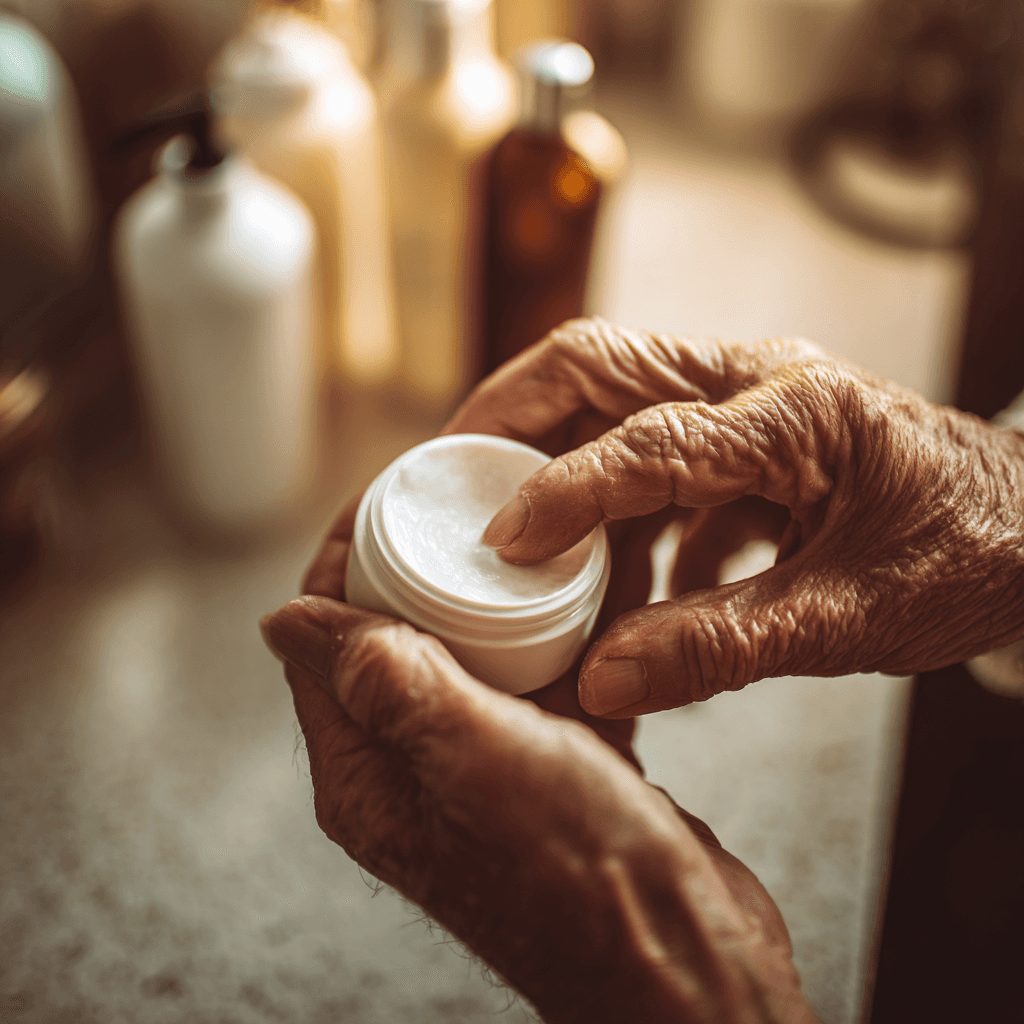

Why Diabetic Skin Is Fundamentally Different (The Science Nobody Explains)
When blood sugar stays elevated—even moderately, even with medication—something happens at the cellular level that changes how your skin functions.
Glucose molecules attach to collagen proteins. This process is called glycation.
Glycated collagen becomes stiff. Brittle. Less able to retain moisture. Less able to absorb what you put on it.
This is why diabetic skin:
Loses moisture 3x faster than non-diabetic skin. That lotion you applied at 8am? It's gone by 10am. Not because the product is weak—because your skin can't hold onto it.
Resists absorption. Glycated tissue forms a barrier. Standard water-based lotions sit on the surface. They feel greasy but don't penetrate. Two hours later, your skin is tight and dry again.
Cracks instead of stretching. Healthy collagen flexes. Glycated collagen snaps. That's why your heels crack at the edges—exactly where skin needs to flex when you walk.
Heals slowly. Compromised circulation (another diabetes effect) means less blood flow to skin tissue. Small cracks become persistent wounds. What would heal in 3 days for a non-diabetic takes 3 weeks for you.
This isn't "dry skin." It's a cascade of glucose-driven damage that standard skincare was never designed to address.
The 4 Types of Diabetic Skin Damage (Most People Only Know About One)
When most people think "diabetic skin problems," they think "dry skin."
That's Type 1. There are three others—and treating Type 1 solutions when you have Type 3 damage guarantees failure.
Type 1: Glycation-Based Dryness
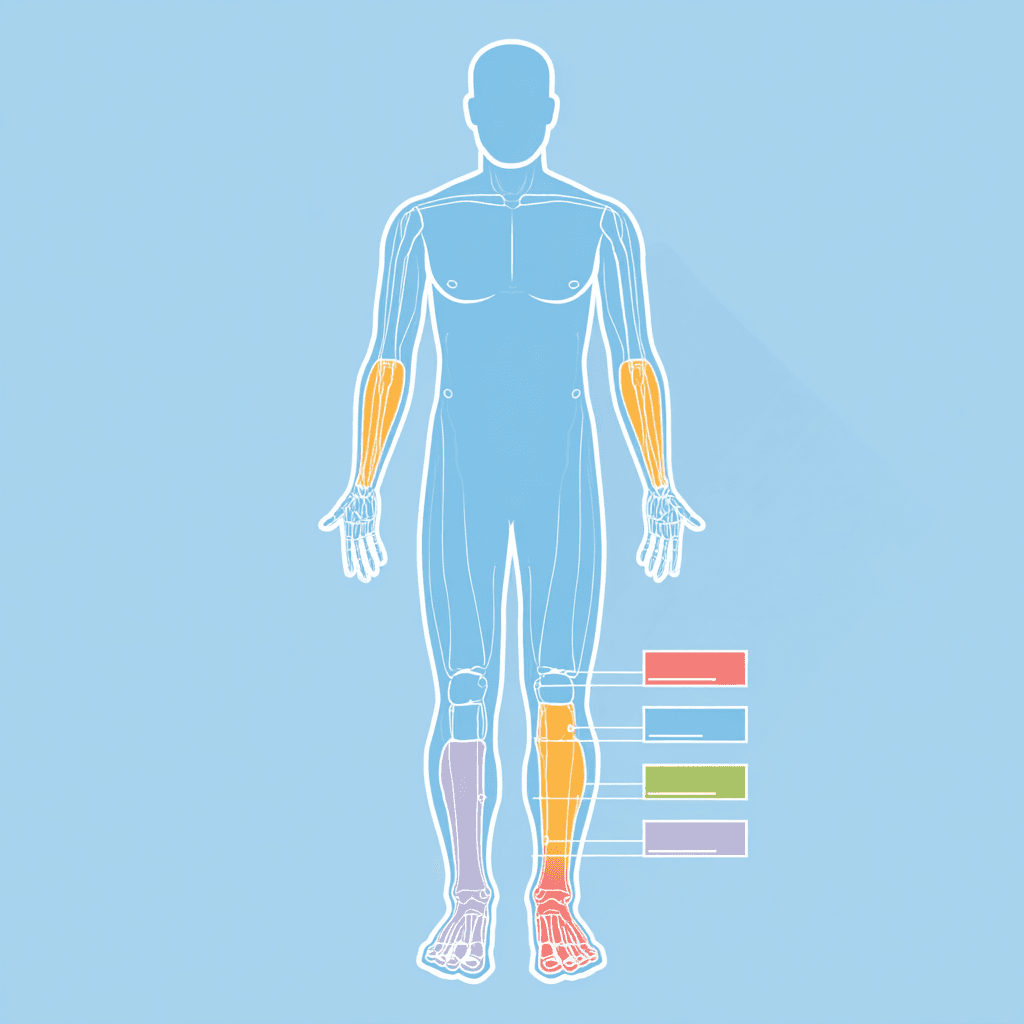
The collagen damage described above. Skin can't retain moisture. Appears on shins, forearms, and hands. Feels rough and papery. Responds poorly to standard moisturizers because the issue is structural, not surface-level.
Type 2: Neuropathy-Related Neglect
Nerve damage means you can't feel how damaged your skin is. Your feet could be severely cracked, but reduced sensation means no pain signal. People with Type 2 damage often don't realize there's a problem until they see blood on their socks.
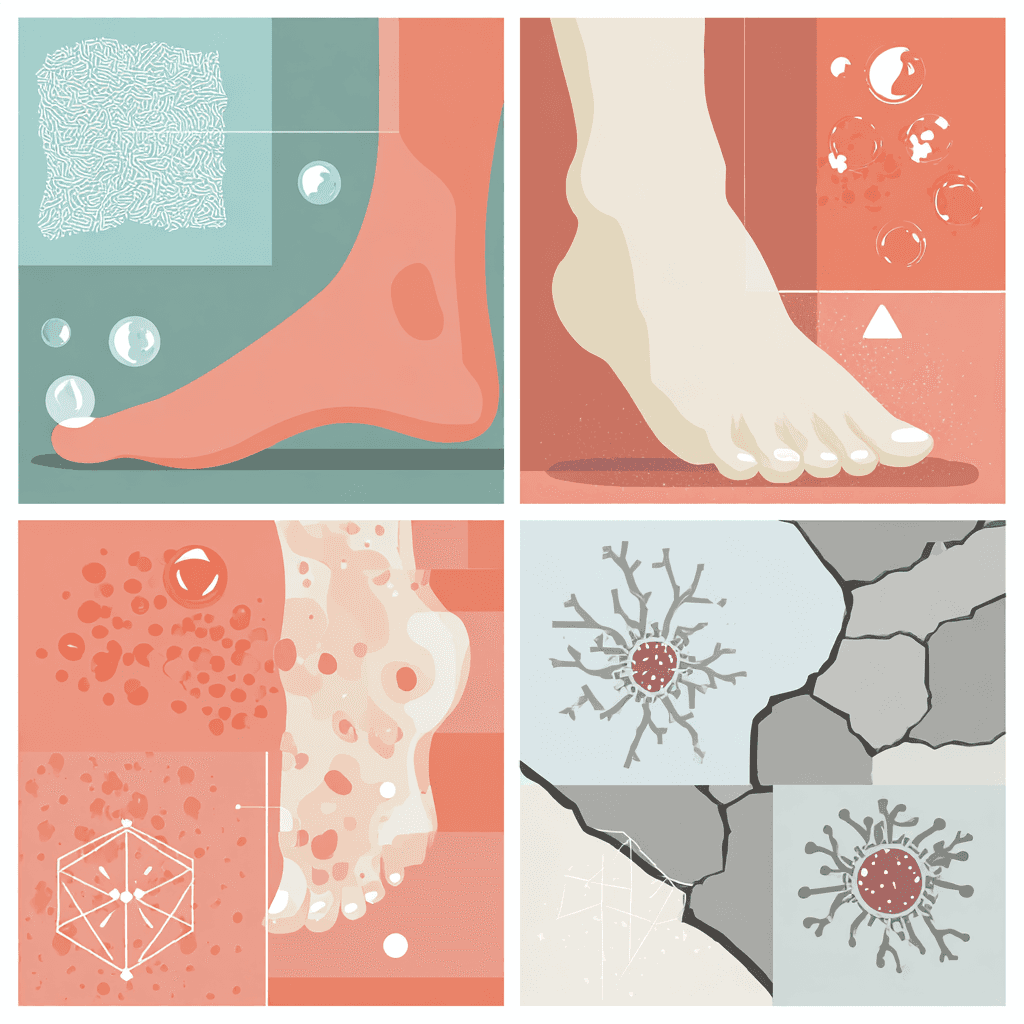
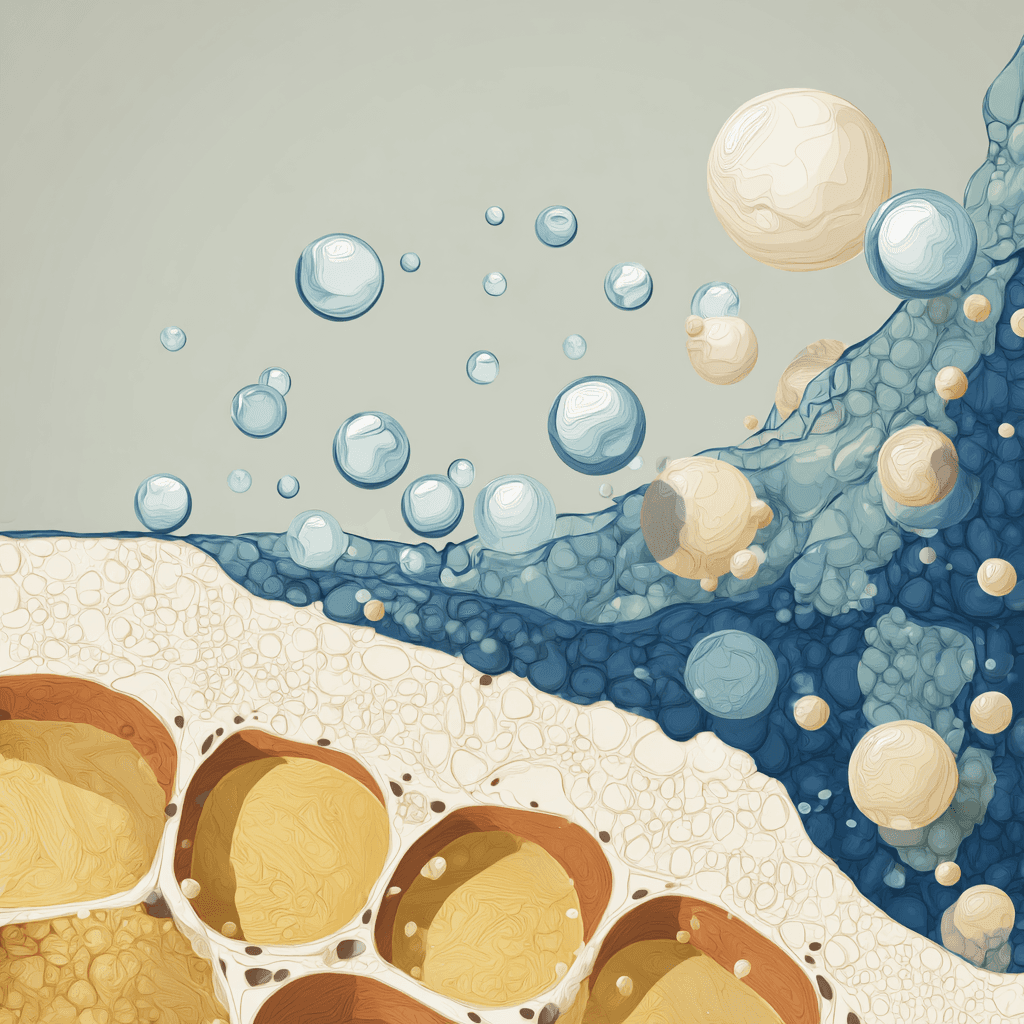
Type 3: Circulation-Impaired Healing
Reduced blood flow to extremities means skin cells regenerate slowly. Small cracks become chronic wounds. Healing that should take days takes weeks. This type requires approaches that support cell turnover, not just moisture.
Type 4: Barrier-Compromised Skin
The protective outer layer is damaged. Skin becomes vulnerable to bacteria and fungal growth. Infections take hold in cracks. This type needs barrier repair and antimicrobial protection, not just hydration.
Here's the problem: most diabetics have 2-3 types simultaneously. Their heels have Type 1 + Type 3 + Type 4. Their hands have Type 1 alone.
Using a single "diabetic skin lotion" across all areas treats everything as Type 1. It ignores circulation issues. It ignores barrier damage. It addresses maybe 30% of the actual problem.
This is why 79% are treating the wrong condition. Not because they chose bad products—because they didn't know which type of damage they were dealing with.
Why "Extra Strength" Diabetic Lotions Still Don't Work.
Walk into any pharmacy. You'll find a dozen products labeled "diabetic skin care" or "intensive repair" or "extra strength healing."
They all share the same fatal flaw: they assume diabetic skin just needs more moisture.
It doesn't. It needs moisture delivered differently.
The Absorption Problem
Standard lotions are water-based. They rely on healthy skin to absorb them.
Glycated skin isn't healthy. The structural damage creates a barrier that water-based formulas can't penetrate.
Imagine trying to water a plant through a plastic bag. Doesn't matter how much water you pour—it's not getting through.
That's what happens when you apply standard lotion to glycated skin. It sits on the surface, evaporates, and leaves you exactly where you started. Except now your skin is greasy AND dry.
The Penetration Requirement
Diabetic skin needs transdermal delivery—formulas that pass through the skin barrier, not just sit on top of it.
This requires specific carrier ingredients that have molecular structures small enough to penetrate glycated collagen. Most drugstore products don't use these carriers because they're expensive. They're formulating for healthy skin that doesn't need help absorbing.
For diabetic skin, penetration isn't a nice-to-have. It's the entire game. A weaker formula that actually reaches damaged tissue will outperform a "maximum strength" formula that never gets past the surface.
The Single-Product Problem
Even products that penetrate face another issue: diabetic skin has multiple simultaneous problems requiring multiple simultaneous solutions.
One product cannot:
Remove the glycated cell buildup blocking absorption
Deliver active ingredients to damaged tissue
Repair the compromised barrier
Maintain protection between applications
Asking one product to do all four is asking a hammer to also be a screwdriver, a saw, and a level. Each job requires a different tool.
This is why people "try everything" and nothing works. They're trying 15 different hammers when they needed a toolbox.
The 3 Requirements for Diabetic Skin That's Been Damaged for Years.
After analyzing data from over 1.2 million diabetic skin assessments, a clear pattern emerged.
People who successfully improved severe, long-standing diabetic skin damage shared three things in common. They weren't using magical products. They were addressing the problem systematically.
Requirement 1: Surface Preparation
Before any treatment can work, you have to remove what's blocking it.
Diabetic skin accumulates dead, glycated cells faster than healthy skin sheds them. This buildup forms a physical barrier that prevents active ingredients from reaching living tissue.
Most people skip this step entirely. They apply treatments directly to the barrier and wonder why nothing absorbs.
Proper preparation removes this buildup without stripping the natural oils your skin desperately needs. It's the difference between painting over peeling wallpaper versus removing the wallpaper first.

Requirement 2: Transdermal Delivery
The treatment itself must be capable of penetrating glycated tissue.
This means carrier ingredients that pass through compromised skin—not water-based formulas that assume healthy absorption. It means concentrations designed for resistant tissue, not maintenance of already-healthy skin.
Most products marketed for "diabetic skin" fail here. They're standard moisturizers with diabetic labeling. The formula itself isn't designed for the unique penetration challenges of glucose-damaged skin.
Look for approaches that specifically address transdermal delivery. If a product doesn't explain how it penetrates glycated tissue, it probably doesn't.
Home > Diabetes & Skin Health
New Assessment Reveals Why 79%
of Diabetics Are Treating the Wrong Skin Condition.
A free 30-second evaluation identifies which of the 12 types of glucose-related skin damage you may have—so you stop wasting money on products that weren't designed for your specific condition.
By Sarah Mitchell | Diabetic Skin Health Editor | Sponsored Content
If standard approaches haven't worked—or if your skin have looked "off" for months or years—here's what people with similar experiences wish they'd known sooner when they took this free 30 second professional-grade assessment.
Your skin isn't just "dry."
If you have diabetes or prediabetes, what you're experiencing—the cracking heels, the rough patches on your shins, the skin that feels like sandpaper no matter how much lotion you apply—isn't ordinary dryness.
It's glucose damage. And it requires a completely different approach than anything on the drugstore shelf.
Here's what most people never learn: 79% of diabetics we've assessed were treating the wrong skin condition entirely. They bought "intensive repair" creams. They tried prescription moisturizers. They applied lotion three times a day and still woke up with bleeding heel cracks.
They weren't doing anything wrong. They were using products designed for non-diabetic skin.
That's like putting regular gasoline in a diesel engine. It's not about quality. It's about fundamental incompatibility.
Why Diabetic Skin Is Fundamentally Different (The Science Nobody Explains)
When blood sugar stays elevated—even moderately, even with medication—something happens at the cellular level that changes how your skin functions.
Glucose molecules attach to collagen proteins. This process is called glycation.
Glycated collagen becomes stiff. Brittle. Less able to retain moisture. Less able to absorb what you put on it.
This is why diabetic skin:
Loses moisture 3x faster than non-diabetic skin. That lotion you applied at 8am? It's gone by 10am. Not because the product is weak—because your skin can't hold onto it.
Resists absorption. Glycated tissue forms a barrier. Standard water-based lotions sit on the surface. They feel greasy but don't penetrate. Two hours later, your skin is tight and dry again.
Cracks instead of stretching. Healthy collagen flexes. Glycated collagen snaps. That's why your heels crack at the edges—exactly where skin needs to flex when you walk.
Heals slowly. Compromised circulation (another diabetes effect) means less blood flow to skin tissue. Small cracks become persistent wounds. What would heal in 3 days for a non-diabetic takes 3 weeks for you.
This isn't "dry skin." It's a cascade of glucose-driven damage that standard skincare was never designed to address.
The 4 Types of Diabetic Skin Damage (Most People Only Know About One)
When most people think "diabetic skin problems," they think "dry skin."
That's Type 1. There are three others—and treating Type 1 solutions when you have Type 3 damage guarantees failure.
Type 1: Glycation-Based Dryness
The collagen damage described above. Skin can't retain moisture. Appears on shins, forearms, and hands. Feels rough and papery. Responds poorly to standard moisturizers because the issue is structural, not surface-level.
Type 2: Neuropathy-Related Neglect
Nerve damage means you can't feel how damaged your skin is. Your feet could be severely cracked, but reduced sensation means no pain signal. People with Type 2 damage often don't realize there's a problem until they see blood on their socks.
Type 3: Circulation-Impaired Healing
Reduced blood flow to extremities means skin cells regenerate slowly. Small cracks become chronic wounds. Healing that should take days takes weeks. This type requires approaches that support cell turnover, not just moisture.
Type 4: Barrier-Compromised Skin
The protective outer layer is damaged. Skin becomes vulnerable to bacteria and fungal growth. Infections take hold in cracks. This type needs barrier repair and antimicrobial protection, not just hydration.
Here's the problem: most diabetics have 2-3 types simultaneously. Their heels have Type 1 + Type 3 + Type 4. Their hands have Type 1 alone.
Using a single "diabetic skin lotion" across all areas treats everything as Type 1. It ignores circulation issues. It ignores barrier damage. It addresses maybe 30% of the actual problem.
This is why 79% are treating the wrong condition. Not because they chose bad products—because they didn't know which type of damage they were dealing with.
Why "Extra Strength" Diabetic Lotions Still Don't Work.
Walk into any pharmacy. You'll find a dozen products labeled "diabetic skin care" or "intensive repair" or "extra strength healing."
They all share the same fatal flaw: they assume diabetic skin just needs more moisture.
It doesn't. It needs moisture delivered differently.
The Absorption Problem
Standard lotions are water-based. They rely on healthy skin to absorb them.
Glycated skin isn't healthy. The structural damage creates a barrier that water-based formulas can't penetrate.
Imagine trying to water a plant through a plastic bag. Doesn't matter how much water you pour—it's not getting through.
That's what happens when you apply standard lotion to glycated skin. It sits on the surface, evaporates, and leaves you exactly where you started. Except now your skin is greasy AND dry.
The Penetration Requirement
Diabetic skin needs transdermal delivery—formulas that pass through the skin barrier, not just sit on top of it.
This requires specific carrier ingredients that have molecular structures small enough to penetrate glycated collagen. Most drugstore products don't use these carriers because they're expensive. They're formulating for healthy skin that doesn't need help absorbing.
For diabetic skin, penetration isn't a nice-to-have. It's the entire game. A weaker formula that actually reaches damaged tissue will outperform a "maximum strength" formula that never gets past the surface.
The 3 Requirements for Diabetic Skin That's Been Damaged for Years.
After analyzing data from over 580,000 diabetic skin assessments, a clear pattern emerged.
People who successfully improved severe, long-standing diabetic skin damage shared three things in common. They weren't using magical products. They were addressing the problem systematically.
Requirement 1: Surface Preparation
Before any treatment can work, you have to remove what's blocking it.
Diabetic skin accumulates dead, glycated cells faster than healthy skin sheds them. This buildup forms a physical barrier that prevents active ingredients from reaching living tissue.
Most people skip this step entirely. They apply treatments directly to the barrier and wonder why nothing absorbs.
Proper preparation removes this buildup without stripping the natural oils your skin desperately needs. It's the difference between painting over peeling wallpaper versus removing the wallpaper first.
Requirement 2: Transdermal Delivery
The treatment itself must be capable of penetrating glycated tissue.
This means carrier ingredients that pass through compromised skin—not water-based formulas that assume healthy absorption. It means concentrations designed for resistant tissue, not maintenance of already-healthy skin.
Most products marketed for "diabetic skin" fail here. They're standard moisturizers with diabetic labeling. The formula itself isn't designed for the unique penetration challenges of glucose-damaged skin.
Look for approaches that specifically address transdermal delivery. If a product doesn't explain how it penetrates glycated tissue, it probably doesn't.
Requirement 3: Continuous Barrier Protection
Diabetic skin loses moisture continuously. Not just quickly—continuously.
A single morning application cannot maintain hydration until evening. By midday, skin is already tightening, drying, beginning to crack again.
Successful protocols include a maintenance step—something that seals in treatment and provides ongoing protection between primary applications. Especially for high-friction areas (heels, elbows) and high-exposure areas (hands).
Most people apply treatment once or twice daily and expect it to work around the clock. That's 12-16 hours of unprotected exposure. In diabetic skin, that's enough time for cracks to start reopening.

Why Protocols Beat Products (What Dermatologists Know
That Brands Won't Tell You)
Here's something the skincare industry doesn't want you to understand:
For severe, chronic skin conditions, single products don't work. Protocols do.
A protocol is a system—multiple steps working together, each addressing a specific part of the problem.
Dermatologists have known this for decades. When they treat severe diabetic skin in a clinical setting, they don't hand patients one cream. They prescribe a regimen: cleanse this way, apply this treatment, seal with this, repeat at these intervals.
Why don't skincare brands sell protocols? Because selling one product is easier than explaining a system. Because "$24.99 lotion" is simpler than "$79 complete protocol." Because most people want a magic bullet, not a process.
But magic bullets don't exist for diabetic skin. The damage is too multi-faceted. The requirements are too specific.
The 3-step approach that works:
Step 1: Prep — Remove the barrier blocking absorption
Step 2: Treat — Deliver actives through damaged tissue
Step 3: Protect — Maintain barrier between applications
People who follow this system report improvement. People who buy random "diabetic lotions" stay stuck in the same cycle of temporary relief and repeated cracking.
The question isn't "which product should I try next?" The question is "am I addressing all three requirements, or just one?"

Why Guessing Your Skin Type Guarantees Failure.
By now, the pattern should be clear:
Diabetic skin damage has multiple types
Most people have 2-3 types simultaneously
Different types require different approaches
Using Type 1 solutions on Type 3 damage wastes time and money
The question becomes: how do you know which types you're dealing with?
You could guess. Most people do. They look at their symptoms, make assumptions, and buy products that match their assumptions.
This is why most people fail. They're treating their best guess, not their actual condition.
The better approach:
systematic assessment.
The GlycoDerm assessment is an industry-standard evaluation that identifies:
Which of the 4 types of diabetic skin damage you're experiencing
Which areas of your body have which damage types
Your severity level (mild, moderate, severe, chronic)
Whether your damage pattern requires single-product or protocol-based support
Realistic timelines based on your specific severity
This isn't a quiz designed to sell you something. It's the same evaluation framework used in clinical settings to classify diabetic skin conditions—adapted for self-assessment.
It takes 30 seconds. It's completely private. And it replaces guessing with specificity.
What the assessment provides:
✓ Your damage type classification (which of the 4 types, and where)
✓ Your severity rating (so you understand what you're actually dealing with)
✓ Protocol recommendations matched to your specific damage pattern
✓ Realistic improvement timelines for your severity level
✓ If you qualify: up to 52% off matched solutions

GlycoDerm™ 🩺
Take the Free Diabetic Skin Assessment
IIf you've been dealing with cracked, dry, painful diabetic skin for months or years—if you've tried multiple products without lasting improvement—this is where you start.
The GlycoDerm assessment is the same evaluation framework used by professionals to classify diabetic skin damage and recommend appropriate next steps.
30 seconds. Completely private. And you'll finally know:
✓ Which damage types you're actually dealing with (not guessing)
✓ Your severity classification (mild/moderate/severe/chronic)
✓ Whether you need single-product or protocol-based support
✓ Realistic timelines for your severity level
✓ If you qualify: up to 52% off solutions matched to your damage type
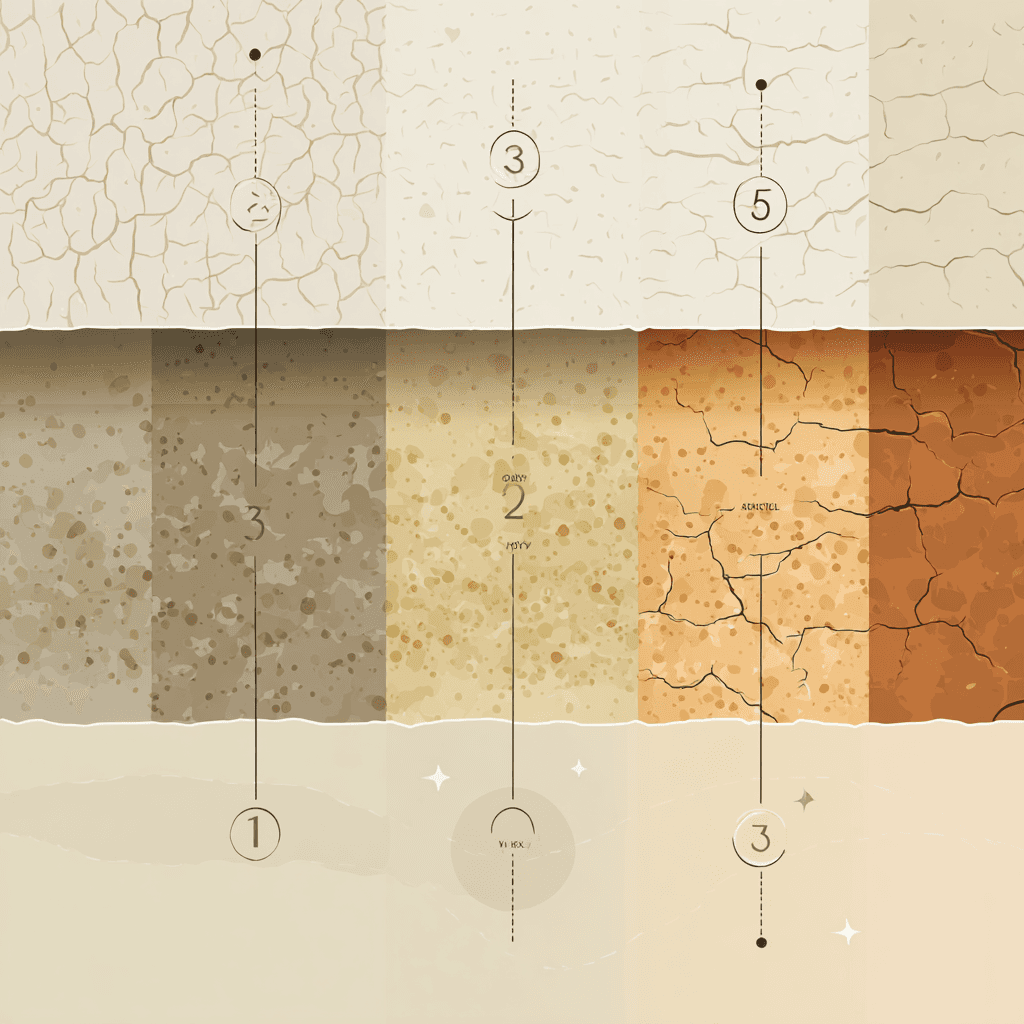
Start your GlycoDerm™ assessment. Click which image looks closest to your concern to start →
This is a structured appearance evaluation, not a medical diagnosis. For persistent health concerns, consult a healthcare professional.
Q: I've had diabetic skin problems for 10+ years. Is improvement even possible?
Yes, but it requires the right approach for your damage types and severity. What worked for someone with mild, recent dryness won't work for chronic, multi-type damage. The GlycoDerm assessment identifies whether your situation requires basic support or a comprehensive protocol. Chronic severe cases take longer (typically 2-4 months) and require more steps, but improvement is possible with the right matched approach.
Q: How is this different from the diabetic lotions I've already tried?
Most diabetic lotions address Type 1 damage only (basic dryness). The GlycoDerm assessment identifies all damage types present—including circulation impairment, barrier compromise, and neuropathy-related issues. It matches you with approaches designed for YOUR specific damage pattern, not generic diabetic skin.
Q: My doctor says to just moisturize more. Why would this be different?
Your doctor focuses on blood sugar management. Dermatological specifics of glucose-related skin damage aren't typically part of endocrinology or general practice training. The GlycoDerm assessment provides the specialized classification that general medical visits don't. This complements, not replaces, your doctor's care.
Q: What if I have extremely cracked, bleeding heels?
That's typically classified as chronic severe damage, often involving multiple damage types (glycation + circulation impairment + barrier compromise). The assessment identifies this and matches you with protocol-based approaches specifically designed for resistant, long-standing damage. These cases require more time and a system approach rather than single-product solutions.
Q: Is there a guarantee on recommended products?
Yes. All matched solutions include a 30-day guarantee. If you don't see appropriate improvement for your severity level, return it for a full refund. You've already wasted money on things that didn't work. This shouldn't be another one.
Daily Skin Journal
References:
¹ American Diabetes Association. "Skin Complications." diabetes.org
² Gefen A. Diabetic foot ulcers: Prevention, assessment, and classification. Wound Repair Regen. 2008.
³ Blakytny R, Jude E. The molecular biology of chronic wounds and delayed healing in diabetes. Diabet Med. 2006.
⁴ Kahana M, et al. Skin tags: A cutaneous marker for diabetes mellitus. Acta Derm Venereol. 1987.
⁵ Ahmed K, et al. Glycation and diabetic complications: A review. J Pak Med Assoc. 2006.
Copyright 2025 © | All rights reserved.
This is an advertisement and not an actual news article, blog, or consumer protection update
Disclaimer: These statements have not been evaluated by the Food and Drug Administration. This information is not intended to be a substitute or replacement for any medical treatment. Please seek the advice of a healthcare professional for your specific health concerns. Individual results may vary.
Marketing Disclosure: This website is a market place. As such you should know that the owner has a monetary connection to the product and services advertised on the site. The owner receives payment whenever a qualified lead is referred but that is the extent of it.
Advertising Disclosure: This website and the products & services referred to on the site are advertising marketplaces. This website is an advertisement and not a news publication. Any photographs of persons used on this site are models. The owner of this site and of the products and services referred to on this site only provides a service where consumers can obtain and compare.
Requirement 3: Continuous Barrier Protection
Requirement 3: Continuous Barrier Protection
Diabetic skin loses moisture continuously. Not just quickly—continuously.
A single morning application cannot maintain hydration until evening. By midday, skin is already tightening, drying, beginning to crack again.
Successful protocols include a maintenance step—something that seals in treatment and provides ongoing protection between primary applications. Especially for high-friction areas (heels, elbows) and high-exposure areas (hands).
Most people apply treatment once or twice daily and expect it to work around the clock. That's 12-16 hours of unprotected exposure. In diabetic skin, that's enough time for cracks to start reopening.
Diabetic skin loses moisture continuously. Not just quickly—continuously.
A single morning application cannot maintain hydration until evening. By midday, skin is already tightening, drying, beginning to crack again.
Successful protocols include a maintenance step—something that seals in treatment and provides ongoing protection between primary applications. Especially for high-friction areas (heels, elbows) and high-exposure areas (hands).
Most people apply treatment once or twice daily and expect it to work around the clock. That's 12-16 hours of unprotected exposure. In diabetic skin, that's enough time for cracks to start reopening.
Why Protocols Beat Products (What Dermatologists Know That Brands Won't Tell You)
Here's something the skincare industry doesn't want you to understand:
For severe, chronic skin conditions, single products don't work. Protocols do.
A protocol is a system—multiple steps working together, each addressing a specific part of the problem.
Dermatologists have known this for decades. When they treat severe diabetic skin in a clinical setting, they don't hand patients one cream. They prescribe a regimen: cleanse this way, apply this treatment, seal with this, repeat at these intervals.
Why don't skincare brands sell protocols? Because selling one product is easier than explaining a system. Because "$24.99 lotion" is simpler than "$79 complete protocol." Because most people want a magic bullet, not a process.
But magic bullets don't exist for diabetic skin. The damage is too multi-faceted. The requirements are too specific.
The 3-step approach that works:
Step 1: Prep — Remove the barrier blocking absorption
Step 2: Treat — Deliver actives through damaged tissue
Step 3: Protect — Maintain barrier between applications
People who follow this system report improvement. People who buy random "diabetic lotions" stay stuck in the same cycle of temporary relief and repeated cracking.
The question isn't "which product should I try next?" The question is "am I addressing all three requirements, or just one?"
Why Protocols Beat Products (What Dermatologists Know
That Brands Won't Tell You)
Here's something the skincare industry doesn't want you to understand:
For severe, chronic skin conditions, single products don't work. Protocols do.
A protocol is a system—multiple steps working together, each addressing a specific part of the problem.
Dermatologists have known this for decades. When they treat severe diabetic skin in a clinical setting, they don't hand patients one cream. They prescribe a regimen: cleanse this way, apply this treatment, seal with this, repeat at these intervals.
Why don't skincare brands sell protocols? Because selling one product is easier than explaining a system. Because "$24.99 lotion" is simpler than "$79 complete protocol." Because most people want a magic bullet, not a process.
But magic bullets don't exist for diabetic skin. The damage is too multi-faceted. The requirements are too specific.
The 3-step approach that works:
Step 1: Prep — Remove the barrier blocking absorption
Step 2: Treat — Deliver actives through damaged tissue
Step 3: Protect — Maintain barrier between applications
People who follow this system report improvement. People who buy random "diabetic lotions" stay stuck in the same cycle of temporary relief and repeated cracking.
The question isn't "which product should I try next?" The question is "am I addressing all three requirements, or just one?"
Why Guessing Your Skin Type Guarantees Failure.
By now, the pattern should be clear:
Diabetic skin damage has multiple types
Most people have 2-3 types simultaneously
Different types require different approaches
Using Type 1 solutions on Type 3 damage wastes time and money
The question becomes: how do you know which types you're dealing with?
You could guess. Most people do. They look at their symptoms, make assumptions, and buy products that match their assumptions.
This is why most people fail. They're treating their best guess, not their actual condition.
The better approach: systematic assessment.
The GlycoDerm assessment is an industry-standard evaluation that identifies:
Which of the 4 types of diabetic skin damage you're experiencing
Which areas of your body have which damage types
Your severity level (mild, moderate, severe, chronic)
Whether your damage pattern requires single-product or protocol-based support
Realistic timelines based on your specific severity
This isn't a quiz designed to sell you something. It's the same evaluation framework used in clinical settings to classify diabetic skin conditions—adapted for self-assessment.
It takes 30 seconds. It's completely private. And it replaces guessing with specificity.
What the assessment provides:
✓ Your damage type classification (which of the 4 types, and where)
✓ Your severity rating (so you understand what you're actually dealing with)
✓ Protocol recommendations matched to your specific damage pattern
✓ Realistic improvement timelines for your severity level
✓ If you qualify: up to 52% off matched solutions
GlycoDerm™ 🩺
Take the Free Diabetic Skin Assessment
IIf you've been dealing with cracked, dry, painful diabetic skin for months or years—if you've tried multiple products without lasting improvement—this is where you start.
The GlycoDerm assessment is the same evaluation framework used by professionals to classify diabetic skin damage and recommend appropriate next steps.
30 seconds. Completely private. And you'll finally know:
✓ Which damage types you're actually dealing with (not guessing)
✓ Your severity classification (mild/moderate/severe/chronic)
✓ Whether you need single-product or protocol-based support
✓ Realistic timelines for your severity level
✓ If you qualify: up to 52% off solutions matched to your damage type
Start your GlycoDerm™ assessment. Click which image looks closest to your concern to start →
GlycoDerm™ 🩺
Take the Free Diabetic Skin Assessment
IIf you've been dealing with cracked, dry, painful diabetic skin for months or years—if you've tried multiple products without lasting improvement—this is where you start.
The GlycoDerm assessment is the same evaluation framework used by professionals to classify diabetic skin damage and recommend appropriate next steps.
30 seconds. Completely private. And you'll finally know:
✓ Which damage types you're actually dealing with (not guessing)
✓ Your severity classification (mild/moderate/severe/chronic)
✓ Whether you need single-product or protocol-based support
✓ Realistic timelines for your severity level
✓ If you qualify: up to 52% off solutions matched to your damage type
Start your GlycoDerm™ assessment. Click which image looks closest to your concern to start →
This is a structured appearance evaluation, not a medical diagnosis. For persistent health concerns, consult a healthcare professional.
Q: I've had diabetic skin problems for 10+ years. Is improvement even possible?
Yes, but it requires the right approach for your damage types and severity. What worked for someone with mild, recent dryness won't work for chronic, multi-type damage. The GlycoDerm assessment identifies whether your situation requires basic support or a comprehensive protocol. Chronic severe cases take longer (typically 2-4 months) and require more steps, but improvement is possible with the right matched approach.
Q: How is this different from the diabetic lotions I've already tried?
Most diabetic lotions address Type 1 damage only (basic dryness). The GlycoDerm assessment identifies all damage types present—including circulation impairment, barrier compromise, and neuropathy-related issues. It matches you with approaches designed for YOUR specific damage pattern, not generic diabetic skin.
Q: My doctor says to just moisturize more. Why would this be different?
Your doctor focuses on blood sugar management. Dermatological specifics of glucose-related skin damage aren't typically part of endocrinology or general practice training. The GlycoDerm assessment provides the specialized classification that general medical visits don't. This complements, not replaces, your doctor's care.
Q: What if I have extremely cracked, bleeding heels?
That's typically classified as chronic severe damage, often involving multiple damage types (glycation + circulation impairment + barrier compromise). The assessment identifies this and matches you with protocol-based approaches specifically designed for resistant, long-standing damage. These cases require more time and a system approach rather than single-product solutions.
Q: Is there a guarantee on recommended products?
Yes. All matched solutions include a 30-day guarantee. If you don't see appropriate improvement for your severity level, return it for a full refund. You've already wasted money on things that didn't work. This shouldn't be another one.
This is a structured appearance evaluation, not a medical diagnosis. For persistent health concerns, consult a healthcare professional.
Q: I've had diabetic skin problems for 10+ years. Is improvement even possible?
Yes, but it requires the right approach for your damage types and severity. What worked for someone with mild, recent dryness won't work for chronic, multi-type damage. The GlycoDerm assessment identifies whether your situation requires basic support or a comprehensive protocol. Chronic severe cases take longer (typically 2-4 months) and require more steps, but improvement is possible with the right matched approach.
Q: How is this different from the diabetic lotions I've already tried?
Most diabetic lotions address Type 1 damage only (basic dryness). The GlycoDerm assessment identifies all damage types present—including circulation impairment, barrier compromise, and neuropathy-related issues. It matches you with approaches designed for YOUR specific damage pattern, not generic diabetic skin.
Q: My doctor says to just moisturize more. Why would this be different?
Your doctor focuses on blood sugar management. Dermatological specifics of glucose-related skin damage aren't typically part of endocrinology or general practice training. The GlycoDerm assessment provides the specialized classification that general medical visits don't. This complements, not replaces, your doctor's care.
Q: What if I have extremely cracked, bleeding heels?
That's typically classified as chronic severe damage, often involving multiple damage types (glycation + circulation impairment + barrier compromise). The assessment identifies this and matches you with protocol-based approaches specifically designed for resistant, long-standing damage. These cases require more time and a system approach rather than single-product solutions.
Q: Is there a guarantee on recommended products?
Yes. All matched solutions include a 30-day guarantee. If you don't see appropriate improvement for your severity level, return it for a full refund. You've already wasted money on things that didn't work. This shouldn't be another one.
Daily Skin Journal
References:
¹ American Diabetes Association. "Skin Complications." diabetes.org
² Gefen A. Diabetic foot ulcers: Prevention, assessment, and classification. Wound Repair Regen. 2008.
³ Blakytny R, Jude E. The molecular biology of chronic wounds and delayed healing in diabetes. Diabet Med. 2006.
⁴ Kahana M, et al. Skin tags: A cutaneous marker for diabetes mellitus. Acta Derm Venereol. 1987.
⁵ Ahmed K, et al. Glycation and diabetic complications: A review. J Pak Med Assoc. 2006.
Copyright 2025 © | All rights reserved.
This is an advertisement and not an actual news article, blog, or consumer protection update
Disclaimer: These statements have not been evaluated by the Food and Drug Administration. This information is not intended to be a substitute or replacement for any medical treatment. Please seek the advice of a healthcare professional for your specific health concerns. Individual results may vary.
Marketing Disclosure: This website is a market place. As such you should know that the owner has a monetary connection to the product and services advertised on the site. The owner receives payment whenever a qualified lead is referred but that is the extent of it.
Advertising Disclosure: This website and the products & services referred to on the site are advertising marketplaces. This website is an advertisement and not a news publication. Any photographs of persons used on this site are models. The owner of this site and of the products and services referred to on this site only provides a service where consumers can obtain and compare.