Daily Skin Journal
Daily Skin Journal
Home > Foot Health
41% of People Treating "Nail Fungus" Don't Have Nail Fungus.
41% of People Treating "Nail Fungus" Don't Have Nail Fungus.
Why most nail treatments fail before they start—and the 45-second assessment that identifies what you actually have.
By Neil Watkins | Jul 12, 2025 | Sponsored Content
Here's a number that should stop you mid-scroll:
41%
That's the percentage of nail conditions misidentified as fungal infections, according to a review of dermatological referrals published in the Journal of the American Academy of Dermatology.
Let that sink in.
Nearly half of everyone treating "nail fungus" right now is treating something they don't have.
They're applying antifungal creams to nails that aren't infected by fungus. They're taking oral medications with real side effects for a condition that won't respond to them. They're waiting months—sometimes years—for improvement that will never come.
Because you can't cure what you've misdiagnosed.
And here's the part that makes this genuinely devastating: every month you treat the wrong condition, the right condition gets worse.
I spent three weeks investigating why nail treatments fail so consistently, interviewing podiatrists, dermatologists, and dozens of people who spent years chasing solutions that never worked. What I found completely changed how I think about nail health—and it might change yours too.

The Fungus Assumption Is Ruining Your Nails.
Here's the script that plays out in medical offices every day:
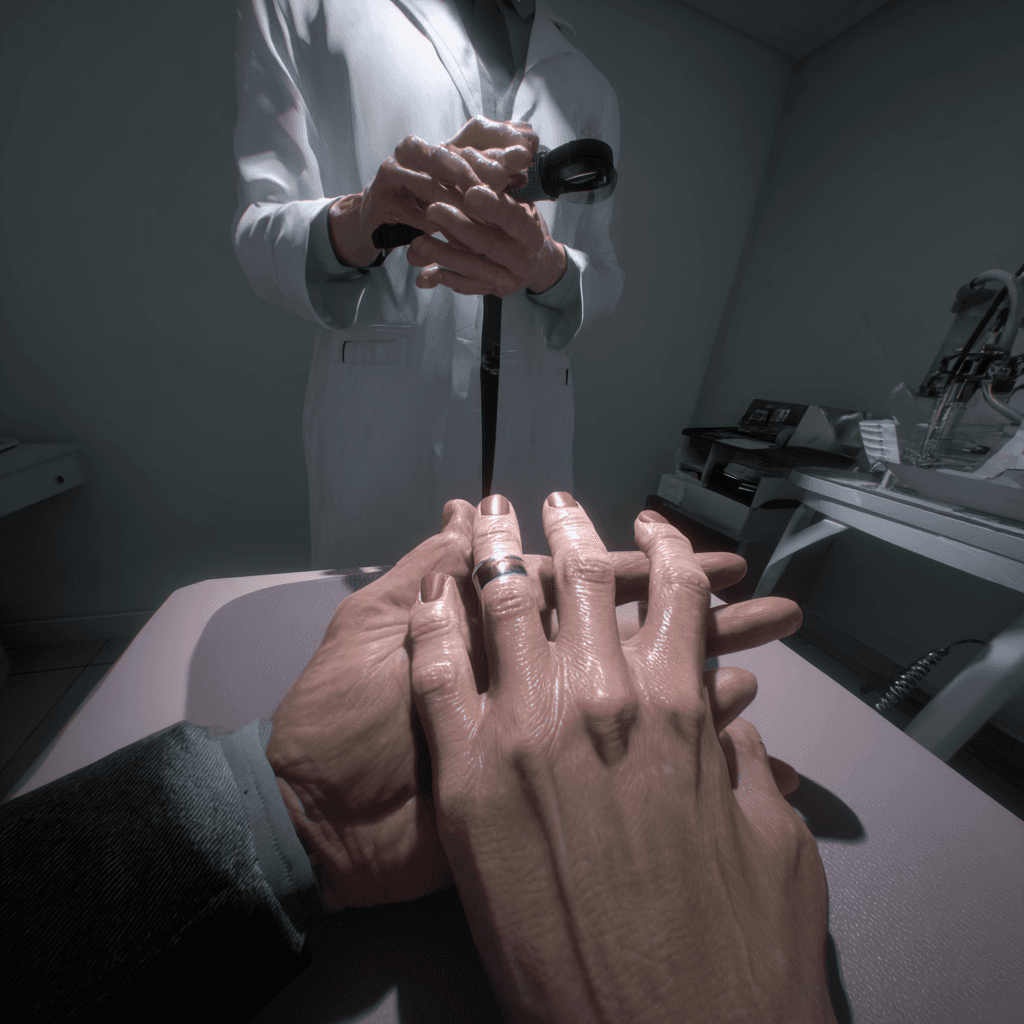
Patient walks in with discolored, thickened, or brittle nails. Doctor glances at them for thirty seconds. "Looks like fungus. Try this antifungal cream. If that doesn't work, we'll try pills."
No lab test. No culture. No microscopy. Just a visual guess based on a few seconds of observation.
The problem? At least 13 different conditions cause nail changes that look virtually identical to fungal infections:
Nail psoriasis causes pitting, discoloration, and separation from the nail bed. It affects up to 50% of people with skin psoriasis and 80% of those with psoriatic arthritis. Antifungal treatments do absolutely nothing for it.
Nail trauma from repeated micro-injuries (tight shoes, running, manual labor) causes thickening and discoloration that mimics fungus perfectly. Athletes, hikers, and people who work with their hands develop this constantly—and waste years treating "infections" that aren't there.
Age-related nail changes affect virtually everyone over 60. Nails naturally become thicker, more brittle, and yellower with age. This isn't pathology. It's biology. But it gets diagnosed as fungus over and over again.
Salon damage from acrylics, gels, and aggressive manicures causes nail plate trauma that leads to discoloration, ridging, and separation. The $40 gel manicure you get monthly might be destroying your nails—and when you seek treatment, you're told it's fungus.
Contact dermatitis from nail polish, adhesives, or workplace chemicals causes nail changes that perfectly mimic fungal infections. The treatment is avoiding the irritant, not applying antifungals for months.
Lichen planus is an inflammatory condition that affects nails in ways that look exactly like fungus—ridging, thinning, splitting. Without proper identification, it progresses and can cause permanent nail loss.
And there are more: bacterial infections, melanonychia, yellow nail syndrome, half-and-half nails indicating kidney issues, Beau's lines from systemic illness, habit-tic deformity from unconscious picking.
Each of these conditions requires a completely different approach. But because "fungus" is the default assumption, millions of people are trapped in treatment cycles that never address their actual problem.
Why Your Dermatologist Missed It.
I don't say this to attack dermatologists. Most are excellent physicians doing their best in a broken system.
But here's the reality: the average dermatology appointment lasts 13 minutes. In that time, the doctor sees your concern, reviews your history, makes an assessment, explains options, and documents everything.
Nail conditions don't reveal themselves in 13 minutes.
They reveal themselves in patterns:
When did changes first appear?
How have they progressed?
Which nails are affected and in what pattern?
What makes them better or worse?
What's your occupation, hobbies, shoe habits?
What treatments have you tried and how did your nails respond?
A dermatologist glancing at your nails while thinking about their next patient doesn't have time to build this picture. So they default to the most common diagnosis—fungus—and send you home with a prescription.
Even when doctors do suspect something other than fungus, definitive diagnosis often requires a nail biopsy. Most patients decline. Most doctors don't push. So the "probably fungus" guess becomes the treatment plan.
Dr. Robert Chen, a podiatrist I interviewed who specializes in nail disorders, put it bluntly: "I see patients every week who've been treating 'fungus' for five, seven, ten years. When I actually examine their nail history and do proper testing, half of them don't have fungus at all. Some never did. They've spent thousands of dollars and years of their lives treating something they never had."


The Real Cost of Misdiagnosis.
This isn't just an inconvenience. Treating the wrong condition has real consequences.
Financial cost: The average person with chronic nail problems spends $1,200-3,000 on treatments before finding what works—if they ever do. Prescription antifungals run $300-800 for a full course. OTC treatments add up quickly when you're trying product after product.
Time cost: Nail treatments aren't quick fixes. You're told to apply creams daily for months. To take pills for 12 weeks. To wait for the nail to grow out completely—which takes 12-18 months for toenails. When the treatment doesn't work, you've lost a year or more.
Health cost: Oral antifungal medications require liver monitoring because they can cause liver damage. If you're taking these drugs for a condition that isn't fungal, you're accepting real medical risks for zero benefit.
Progression cost: While you're treating the wrong thing, the right thing gets worse. Nail psoriasis can progress to permanent nail damage. Untreated lichen planus can cause nail loss. Ongoing trauma keeps compounding. The window for easier treatment closes.
Emotional cost: There's a particular frustration that comes from doing everything "right" and seeing no improvement. It makes you feel broken. Like your body doesn't work the way everyone else's does. Like maybe this is just how your nails are going to look forever.
None of this had to happen. It happened because of a guess made in the first 30 seconds of a medical appointment.
What Actually Identifies Your Condition.
This is where NailScope changes the equation.
NailScope is a 45-second assessment developed by nail health researchers to identify which of 13 distinct nail conditions matches your specific symptoms. It asks the questions that a rushed appointment can't—questions about pattern, progression, triggers, history, and treatment response.
The assessment doesn't guess. It systematically narrows possibilities based on clinical markers:
Location pattern: Which nails are affected? All of them? Just one? Only toenails? Only fingernails? Thumb and big toe together? Each pattern points to different conditions.
Appearance characteristics: Is the discoloration yellow? White? Brown? Green? Are there pits? Ridges? Horizontal lines? Is the nail lifting? Crumbling? Thickening uniformly or just in spots?
Timeline: When did you first notice changes? Did they appear suddenly or gradually? Did anything happen around that time—injury, illness, new medication, stress?
Progression: Are changes spreading? Stable? Getting worse quickly or slowly? Do they wax and wane or steadily progress?
Treatment history: What have you tried? How long? What happened? Did anything work temporarily? Did anything make things worse?
Risk factors: Your occupation, hobbies, shoe habits, nail care routine, underlying health conditions, family history—all of these narrow the diagnostic possibilities significantly.
When you answer these questions honestly, the algorithm cross-references your responses against the clinical presentation patterns for all 13 conditions. It doesn't just tell you "you might have fungus." It tells you specifically which condition your pattern matches—and what actually treats that condition.

Jennifer, 38, office worker, identified contact dermatitis from gel manicures:
"I was obsessed with my gel manicures. Every two weeks for three years. Then my nails started separating from the nail bed, turning yellow, getting ridged.
I was told it was fungus. I stopped the gels and started antifungal treatment for nine months. No improvement. The assessment showed a pattern consistent with contact reaction to acrylates—the chemicals in gel polish.
I'd already stopped the gels, but I was still using a nail strengthener that had similar ingredients. Stopped that, let my nails fully grow out with just gentle care, and they came back completely normal. I never had fungus. I had a chemical reaction that I kept triggering while thinking I was treating it."
Robert, 61, retiree, learned his changes were age-related, not pathological:
"My doctor looked at my nails for maybe ten seconds and prescribed antifungal cream. I used it faithfully for a year. No change. He said try pills. I didn't want to risk liver damage for something that clearly wasn't working.
The assessment asked my age and showed me that my nail pattern—mild thickening, slight yellowing, some ridging—was completely consistent with normal aging. Especially because it was all ten toenails equally and had progressed very slowly over many years.
I stopped the antifungal. Started basic nail care—keeping them trimmed, moisturized, protected. They look the same as before, but I stopped wasting money and worrying that I had some stubborn infection. I just had 61-year-old nails."

Why This Matters More Than You Think.
Your nails aren't just cosmetic. They're diagnostic.
Many nail changes are the first visible sign of systemic conditions. Nail pitting can indicate psoriasis years before skin plaques appear. Specific nail changes correlate with thyroid disorders, anemia, diabetes, lung disease, liver problems, and nutritional deficiencies.
When you dismiss nail changes as "probably fungus" and start antifungal treatment, you potentially miss these signals. You treat a symptom while ignoring what your body might be telling you about deeper issues.
This doesn't mean every nail change indicates serious illness. Most don't. But proper identification—knowing what you actually have—lets you respond appropriately. If it's trauma, you modify behavior. If it's psoriasis, you discuss systemic treatment options with your doctor. If it's contact dermatitis, you identify and eliminate the trigger.
If it's age-related, you stop worrying and wasting money.
The 45-second assessment isn't just about nail appearance. It's about understanding what your body is communicating and responding to the right signal instead of the wrong guess.
Home > Foot Health
41% of People Treating "Nail Fungus" Don't Have Nail Fungus.
Why most nail treatments fail before they start—and the 45-second assessment that identifies what you actually have.
By Neil Watkins | Jul 12, 2025 | Sponsored Content
Here's a number that should stop you mid-scroll:
41%
That's the percentage of nail conditions misidentified as fungal infections, according to a review of dermatological referrals published in the Journal of the American Academy of Dermatology.
Let that sink in.
Nearly half of everyone treating "nail fungus" right now is treating something they don't have.
They're applying antifungal creams to nails that aren't infected by fungus. They're taking oral medications with real side effects for a condition that won't respond to them. They're waiting months—sometimes years—for improvement that will never come.
Because you can't cure what you've misdiagnosed.
And here's the part that makes this genuinely devastating: every month you treat the wrong condition, the right condition gets worse.
I spent three weeks investigating why nail treatments fail so consistently, interviewing podiatrists, dermatologists, and dozens of people who spent years chasing solutions that never worked. What I found completely changed how I think about nail health—and it might change yours too.
The Fungus Assumption Is Ruining Your Nails.
Here's the script that plays out in medical offices every day:
Patient walks in with discolored, thickened, or brittle nails. Doctor glances at them for thirty seconds. "Looks like fungus. Try this antifungal cream. If that doesn't work, we'll try pills."
No lab test. No culture. No microscopy. Just a visual guess based on a few seconds of observation.
The problem? At least 13 different conditions cause nail changes that look virtually identical to fungal infections:
Nail psoriasis causes pitting, discoloration, and separation from the nail bed. It affects up to 50% of people with skin psoriasis and 80% of those with psoriatic arthritis. Antifungal treatments do absolutely nothing for it.
Nail trauma from repeated micro-injuries (tight shoes, running, manual labor) causes thickening and discoloration that mimics fungus perfectly. Athletes, hikers, and people who work with their hands develop this constantly—and waste years treating "infections" that aren't there.
Age-related nail changes affect virtually everyone over 60. Nails naturally become thicker, more brittle, and yellower with age. This isn't pathology. It's biology. But it gets diagnosed as fungus over and over again.
Salon damage from acrylics, gels, and aggressive manicures causes nail plate trauma that leads to discoloration, ridging, and separation. The $40 gel manicure you get monthly might be destroying your nails—and when you seek treatment, you're told it's fungus.
Contact dermatitis from nail polish, adhesives, or workplace chemicals causes nail changes that perfectly mimic fungal infections. The treatment is avoiding the irritant, not applying antifungals for months.
Lichen planus is an inflammatory condition that affects nails in ways that look exactly like fungus—ridging, thinning, splitting. Without proper identification, it progresses and can cause permanent nail loss.
And there are more: bacterial infections, melanonychia, yellow nail syndrome, half-and-half nails indicating kidney issues, Beau's lines from systemic illness, habit-tic deformity from unconscious picking.
Each of these conditions requires a completely different approach. But because "fungus" is the default assumption, millions of people are trapped in treatment cycles that never address their actual problem.
Why Your Dermatologist Missed It.
I don't say this to attack dermatologists. Most are excellent physicians doing their best in a broken system.
But here's the reality: the average dermatology appointment lasts 13 minutes. In that time, the doctor sees your concern, reviews your history, makes an assessment, explains options, and documents everything.
Nail conditions don't reveal themselves in 13 minutes.
They reveal themselves in patterns:
When did changes first appear?
How have they progressed?
Which nails are affected and in what pattern?
What makes them better or worse?
What's your occupation, hobbies, shoe habits?
What treatments have you tried and how did your nails respond?
A dermatologist glancing at your nails while thinking about their next patient doesn't have time to build this picture. So they default to the most common diagnosis—fungus—and send you home with a prescription.
Even when doctors do suspect something other than fungus, definitive diagnosis often requires a nail biopsy. Most patients decline. Most doctors don't push. So the "probably fungus" guess becomes the treatment plan.
Dr. Robert Chen, a podiatrist I interviewed who specializes in nail disorders, put it bluntly: "I see patients every week who've been treating 'fungus' for five, seven, ten years. When I actually examine their nail history and do proper testing, half of them don't have fungus at all. Some never did. They've spent thousands of dollars and years of their lives treating something they never had."
The Real Cost of Misdiagnosis.
This isn't just an inconvenience. Treating the wrong condition has real consequences.
Financial cost: The average person with chronic nail problems spends $1,200-3,000 on treatments before finding what works—if they ever do. Prescription antifungals run $300-800 for a full course. OTC treatments add up quickly when you're trying product after product.
Time cost: Nail treatments aren't quick fixes. You're told to apply creams daily for months. To take pills for 12 weeks. To wait for the nail to grow out completely—which takes 12-18 months for toenails. When the treatment doesn't work, you've lost a year or more.
Health cost: Oral antifungal medications require liver monitoring because they can cause liver damage. If you're taking these drugs for a condition that isn't fungal, you're accepting real medical risks for zero benefit.
Progression cost: While you're treating the wrong thing, the right thing gets worse. Nail psoriasis can progress to permanent nail damage. Untreated lichen planus can cause nail loss. Ongoing trauma keeps compounding. The window for easier treatment closes.
Emotional cost: There's a particular frustration that comes from doing everything "right" and seeing no improvement. It makes you feel broken. Like your body doesn't work the way everyone else's does. Like maybe this is just how your nails are going to look forever.
None of this had to happen. It happened because of a guess made in the first 30 seconds of a medical appointment.
What Actually Identifies Your Condition.
This is where NailScope changes the equation.
NailScope is a 45-second assessment developed by nail health researchers to identify which of 13 distinct nail conditions matches your specific symptoms. It asks the questions that a rushed appointment can't—questions about pattern, progression, triggers, history, and treatment response.
The assessment doesn't guess. It systematically narrows possibilities based on clinical markers:
Location pattern: Which nails are affected? All of them? Just one? Only toenails? Only fingernails? Thumb and big toe together? Each pattern points to different conditions.
Appearance characteristics: Is the discoloration yellow? White? Brown? Green? Are there pits? Ridges? Horizontal lines? Is the nail lifting? Crumbling? Thickening uniformly or just in spots?
Timeline: When did you first notice changes? Did they appear suddenly or gradually? Did anything happen around that time—injury, illness, new medication, stress?
Progression: Are changes spreading? Stable? Getting worse quickly or slowly? Do they wax and wane or steadily progress?
Treatment history: What have you tried? How long? What happened? Did anything work temporarily? Did anything make things worse?
Risk factors: Your occupation, hobbies, shoe habits, nail care routine, underlying health conditions, family history—all of these narrow the diagnostic possibilities significantly.
When you answer these questions honestly, the algorithm cross-references your responses against the clinical presentation patterns for all 13 conditions. It doesn't just tell you "you might have fungus." It tells you specifically which condition your pattern matches—and what actually treats that condition.
Jennifer, 38, office worker, identified contact dermatitis from gel manicures:
"I was obsessed with my gel manicures. Every two weeks for three years. Then my nails started separating from the nail bed, turning yellow, getting ridged.
I was told it was fungus. I stopped the gels and started antifungal treatment for nine months. No improvement. The assessment showed a pattern consistent with contact reaction to acrylates—the chemicals in gel polish.
I'd already stopped the gels, but I was still using a nail strengthener that had similar ingredients. Stopped that, let my nails fully grow out with just gentle care, and they came back completely normal. I never had fungus. I had a chemical reaction that I kept triggering while thinking I was treating it."
Why This Matters More Than You Think.
Your nails aren't just cosmetic. They're diagnostic.
Many nail changes are the first visible sign of systemic conditions. Nail pitting can indicate psoriasis years before skin plaques appear. Specific nail changes correlate with thyroid disorders, anemia, diabetes, lung disease, liver problems, and nutritional deficiencies.
When you dismiss nail changes as "probably fungus" and start antifungal treatment, you potentially miss these signals. You treat a symptom while ignoring what your body might be telling you about deeper issues.
This doesn't mean every nail change indicates serious illness. Most don't. But proper identification—knowing what you actually have—lets you respond appropriately. If it's trauma, you modify behavior. If it's psoriasis, you discuss systemic treatment options with your doctor. If it's contact dermatitis, you identify and eliminate the trigger.
If it's age-related, you stop worrying and wasting money.
The 45-second assessment isn't just about nail appearance. It's about understanding what your body is communicating and responding to the right signal instead of the wrong guess.
Let's talk about what severe nail concerns actually cost you.
Not just money on failed products. The opportunities you skip. The beach trips you decline. The intimacy you avoid. The constant mental energy spent strategizing how to keep people from seeing your feet.
One person who finally addressed their severe nail concerns after 8 years said: "I didn't realize how much headspace this was taking up until it was gone."
The psychological burden of severe nail appearance issues is massive. And the longer you carry it, the heavier it gets.
What People Regret:
Years spent hiding instead of addressing
Relationships strained by self-consciousness
Activities avoided (yoga, swimming, dating)
The compounding shame of "letting it get this bad"

The Guarantee Your Dermatologist Won't Offer.
Here's something to consider: your dermatologist won't refund your copay if their guess was wrong. The pharmacy won't take back the prescription that didn't work. The months or years you spent treating the wrong thing? Gone.
The NailScope-matched protocols come with a 30-day guarantee. If you don't see improvement appropriate to your specific condition and severity level, you get a full refund.
This guarantee exists because condition-specific treatment works. When you're finally addressing what you actually have—instead of what someone guessed you might have—results follow. Not always immediately (nail growth takes time), but measurable progress within the first 30 days.
If you're skeptical, you should be. You've probably been disappointed before. But a guarantee removes the risk. Worst case, you get your money back. Best case, you finally treat the right thing.

Here's what people with severe cases wish they'd done sooner: get a real assessment of their situation before trying random products.
Not a medical diagnosis—but a structured evaluation that identifies the severity level, how many nails are involved, what approaches might help, and what realistic timelines look like.
That's exactly what the nailscope assessment does. It's an industry-standard evaluation tool that asks the right questions to understand severe, stubborn nail concerns specifically—not just surface-level issues.
What the Assessment Provides:
✔️ Severity classification (mild/moderate/severe/extreme)
✔️ Customized approach recommendations based on YOUR specific situation
✔️ Realistic timeline expectations (not generic promises)
✔️ If you qualify: up to 52% off solutions designed for your severity level

A Real Story (Severe Case)
David had dealt with thick, dark toenails for 11 years. All ten toes. He'd tried prescription medications that didn't work. Spent over $2,000 on various products and treatments.
By the time he took the nailscope assessment, he was skeptical of everything. But the assessment identified his case as severe/chronic and recommended a comprehensive approach specifically designed for multi-year, multi-nail concerns.
He qualified for a major discount and committed to the recommended routine. Three weeks in, his nails felt less thick and painful. Six weeks in, new growth was noticeably clearer. Twelve weeks in, he was wearing sandals again without feeling embarrassment.
Results vary. This reflects one person's experience with appearance and comfort support—not a medical outcome. Severe cases typically require longer commitment and professional consultation.

nailscope™ 🔬
Take the free nailscope assessment
If you've been dealing with severe nail concerns for months or years—if you've tried multiple approaches without success—this is where you start.
The nailscope assessment is the same evaluation framework used by professionals to classify nail appearance severity and recommend appropriate next steps.
It takes about 30 seconds. It's completely private. And it will give you:
✓ Your severity classification (so you understand what you're actually dealing with)
✓ Custom recommendations based on your specific situation
✓ Realistic timeline expectations for your severity level
✓ If you qualify: up to 52% off solutions designed for stubborn cases
Start your nailscope™ assessment. Click which image looks closest to your nails to start →
This helps us understand the primary pattern affecting your nails.
This is a structured appearance evaluation, not a medical diagnosis. For persistent health concerns, consult a healthcare professional.
Q: I've had this for 5+ years. Is it even possible to improve severe cases?
Yes, but it requires the right approach for your severity level. Mild-case solutions won't work. The nailscope assessment identifies whether your situation is severe/chronic and recommends approaches specifically designed for stubborn, long-standing concerns. Results vary and take longer (typically 6-12 months for severe cases).
Q: How is this different from what I've already tried?
Most people with severe cases have tried products designed for mild, early-stage concerns. The nailscope assessment matches you with solutions appropriate for YOUR severity level—including professional-grade formulas for stubborn cases.
Q: Will this work if prescriptions didn't?
Every situation is different. What we know is that many people with severe cases found appearance and comfort improvement with targeted, non-prescription approaches after other methods failed. The assessment helps identify whether your specific situation might benefit from these alternatives. Always consult a healthcare professional about your options.
Q: What if I have extremely thick, dark nails that crumble?
That's classified as a severe/chronic concern. The nailscope assessment will identify this and recommend approaches specifically designed for extreme cases—not generic solutions. These cases take longer (6-12+ months) but people do see improvement with the right consistent approach.
Q: Is there a guarantee?
Yes. all solutions comes with a 30-day guarantee. If you don't see appearance or comfort improvement appropriate for your severity level, you can return it. No risk.
Your Next Step (If You've Tried Everything Else)
If you're reading this with thick, dark, crumbling nails that have resisted every standard approach—if you've dealt with this for years and you're tired of hiding—the nailscope assessment is your starting point.
It's not another random product recommendation. It's an industry-standard evaluation that identifies your specific severity level and matches you with approaches designed for stubborn cases.
Plus, if you qualify based on your assessment results, you'll receive up to 52% off.
Take 30 seconds. Get real answers. Stop guessing.
Private. Professional-grade. Designed specifically for people who've already tried the "easy" solutions.
Daily Skin Journal
References:
¹ Centers for Disease Control and Prevention. “Fungal Nail Infections.” https://www.cdc.gov/fungal/nail-infections.html
² Elewski BE. Onychomycosis: Pathogenesis, diagnosis, and management. Clin Microbiol Rev. 1998;11(3):415–429.
³ Gupta AK & Simpson FC. New therapeutic options for onychomycosis. Expert Opin Pharmacother. 2012;13(8):1131–1142.
⁴ Crawford F, et al. Topical treatments for fungal infections of the skin and nails of the foot. Cochrane Database Syst Rev. 2007.
⁵ Hammer KA, et al. Treatment of onychomycosis with tea tree oil. Australas J Dermatol. 2002;43(3):175–178.
⁶ Baran R, et al. Topical antifungal treatments for onychomycosis: an overview of current strategies. J Eur Acad Dermatol Venereol. 2014;28(6):727–735.
⁷ Gupta AK, et al. Systemic antifungal agents for onychomycosis: a review of safety and efficacy. J Am Acad Dermatol. 1997;38(5 Pt 2):S57–S63.
⁸ Sudarshan V, et al. Evaluation of antifungal activity of Aloe vera. Mycoses. 2005;48(3):179–185.
⁹ Abdel-Rahman SM, et al. The antifungal activity of undecylenic acid in superficial mycoses. J Clin Microbiol. 1993;31(9):2345–2349.
¹⁰ Hammer KA, et al. Treatment of onychomycosis with tea tree oil. Australas J Dermatol. 2002;43(3):175–178.
¹¹ Whitehouse MW, et al. Emu oil(s): a source of non-toxic transdermal anti-inflammatory agents. Inflammopharmacology. 1998;6(1):1–8.
Copyright 2025 © | All rights reserved.
This is an advertisement and not an actual news article, blog, or consumer protection update
Disclaimer: These statements have not been evaluated by the Food and Drug Administration. This information is not intended to be a substitute or replacement for any medical treatment. Please seek the advice of a healthcare professional for your specific health concerns. Individual results may vary.
Marketing Disclosure: This website is a market place. As such you should know that the owner has a monetary connection to the product and services advertised on the site. The owner receives payment whenever a qualified lead is referred but that is the extent of it.
Advertising Disclosure: This website and the products & services referred to on the site are advertising marketplaces. This website is an advertisement and not a news publication. Any photographs of persons used on this site are models. The owner of this site and of the products and services referred to on this site only provides a service where consumers can obtain and compare.
The Protocol That Matches Your Condition.
Here's what changes when you stop guessing:
Instead of generic "nail treatment," you get condition-specific intervention.
The NailScope assessment identifies your pattern and matches you with the specific protocol designed for that condition:
For fungal infections (when that's actually what you have): Multi-mechanism antifungal approach that addresses the infection from multiple angles—something most single-ingredient treatments don't do.
For nail psoriasis: Targeted approach that addresses the autoimmune inflammation driving nail changes, not just surface symptoms.
For trauma-related changes: Protection and repair protocol that lets damaged nails grow out while preventing further injury.
For salon damage: Recovery protocol that addresses nail plate trauma and chemical damage while supporting healthy regrowth.
For age-related changes: Maintenance approach that optimizes nail health within the reality of natural aging processes.
For contact dermatitis: Identification guidance for finding your triggers plus gentle restoration support.
Each protocol is different because each condition is different. The treatment that works for fungus won't work for psoriasis. The approach that helps trauma won't help lichen planus. One-size-fits-all nail products fail because nails aren't one-size-fits-all.
Let's talk about what severe nail concerns actually cost you.
Not just money on failed products. The opportunities you skip. The beach trips you decline. The intimacy you avoid. The constant mental energy spent strategizing how to keep people from seeing your feet.
One person who finally addressed their severe nail concerns after 8 years said: "I didn't realize how much headspace this was taking up until it was gone."
The psychological burden of severe nail appearance issues is massive. And the longer you carry it, the heavier it gets.
What People Regret:
Years spent hiding instead of addressing
Relationships strained by self-consciousness
Activities avoided (yoga, swimming, dating)
The compounding shame of "letting it get this bad"
The Guarantee Your Dermatologist Won't Offer.
Here's something to consider: your dermatologist won't refund your copay if their guess was wrong. The pharmacy won't take back the prescription that didn't work. The months or years you spent treating the wrong thing? Gone.
The NailScope-matched protocols come with a 30-day guarantee. If you don't see improvement appropriate to your specific condition and severity level, you get a full refund.
This guarantee exists because condition-specific treatment works. When you're finally addressing what you actually have—instead of what someone guessed you might have—results follow. Not always immediately (nail growth takes time), but measurable progress within the first 30 days.
If you're skeptical, you should be. You've probably been disappointed before. But a guarantee removes the risk. Worst case, you get your money back. Best case, you finally treat the right thing.
A Real Story (Severe Case)
David had dealt with thick, dark toenails for 11 years. All ten toes. He'd tried prescription medications that didn't work. Spent over $2,000 on various products and treatments.
By the time he took the nailscope assessment, he was skeptical of everything. But the assessment identified his case as severe/chronic and recommended a comprehensive approach specifically designed for multi-year, multi-nail concerns.
He qualified for a major discount and committed to the recommended routine. Three weeks in, his nails felt less thick and painful. Six weeks in, new growth was noticeably clearer. Twelve weeks in, he was wearing sandals again without feeling embarrassment.
Results vary. This reflects one person's experience with appearance and comfort support—not a medical outcome. Severe cases typically require longer commitment and professional consultation.
nailscope™ 🔬
Take the free nailscope™ assessment
If you've been dealing with severe nail concerns for months or years—if you've tried multiple approaches without success—this is where you start.
The nailscope assessment is the same evaluation framework used by professionals to classify nail appearance severity and recommend appropriate next steps.
It takes about 30 seconds. It's completely private. And it will give you:
✓ Your severity classification (so you understand what you're actually dealing with)
✓ Custom recommendations based on your specific situation
✓ Realistic timeline expectations for your severity level
✓ If you qualify: up to 52% off solutions designed for stubborn cases
Start your nailscope™ assessment. Click which image looks closest to your nails to start →
nailscope™ 🔬
Take the free nailscope assessment
If you've been dealing with severe nail concerns for months or years—if you've tried multiple approaches without success—this is where you start.
The nailscope assessment is the same evaluation framework used by professionals to classify nail appearance severity and recommend appropriate next steps.
It takes about 30 seconds. It's completely private. And it will give you:
✓ Your severity classification (so you understand what you're actually dealing with)
✓ Custom recommendations based on your specific situation
✓ Realistic timeline expectations for your severity level
✓ If you qualify: up to 52% off solutions designed for stubborn cases
Start your nailscope™ assessment. Click which image looks closest to your nails to start →
This helps us understand the primary pattern affecting your nails.
This is a structured appearance evaluation, not a medical diagnosis. For persistent health concerns, consult a healthcare professional.
Q: I've had this for 5+ years. Is it even possible to improve severe cases?
Yes, but it requires the right approach for your severity level. Mild-case solutions won't work. The nailscope assessment identifies whether your situation is severe/chronic and recommends approaches specifically designed for stubborn, long-standing concerns. Results vary and take longer (typically 6-12 months for severe cases).
Q: How is this different from what I've already tried?
Most people with severe cases have tried products designed for mild, early-stage concerns. The nailscope assessment matches you with solutions appropriate for YOUR severity level—including professional-grade formulas for stubborn cases.
Q: Will this work if prescriptions didn't?
Every situation is different. What we know is that many people with severe cases found appearance and comfort improvement with targeted, non-prescription approaches after other methods failed. The assessment helps identify whether your specific situation might benefit from these alternatives. Always consult a healthcare professional about your options.
Q: What if I have extremely thick, dark nails that crumble?
That's classified as a severe/chronic concern. The nailscope assessment will identify this and recommend approaches specifically designed for extreme cases—not generic solutions. These cases take longer (6-12+ months) but people do see improvement with the right consistent approach.
Q: Is there a guarantee?
Yes. all solutions comes with a 30-day guarantee. If you don't see appearance or comfort improvement appropriate for your severity level, you can return it. No risk.
Your Next Step (If You've Tried Everything Else)
If you're reading this with thick, dark, crumbling nails that have resisted every standard approach—if you've dealt with this for years and you're tired of hiding—the nailscope assessment is your starting point.
It's not another random product recommendation. It's an industry-standard evaluation that identifies your specific severity level and matches you with approaches designed for stubborn cases.
Plus, if you qualify based on your assessment results, you'll receive up to 52% off.
Take 30 seconds. Get real answers. Stop guessing.
Private. Professional-grade. Designed specifically for people who've already tried the "easy" solutions.
Daily Skin Journal
References:
¹ Centers for Disease Control and Prevention. “Fungal Nail Infections.” https://www.cdc.gov/fungal/nail-infections.html
² Elewski BE. Onychomycosis: Pathogenesis, diagnosis, and management. Clin Microbiol Rev. 1998;11(3):415–429.
³ Gupta AK & Simpson FC. New therapeutic options for onychomycosis. Expert Opin Pharmacother. 2012;13(8):1131–1142.
⁴ Crawford F, et al. Topical treatments for fungal infections of the skin and nails of the foot. Cochrane Database Syst Rev. 2007.
⁵ Hammer KA, et al. Treatment of onychomycosis with tea tree oil. Australas J Dermatol. 2002;43(3):175–178.
⁶ Baran R, et al. Topical antifungal treatments for onychomycosis: an overview of current strategies. J Eur Acad Dermatol Venereol. 2014;28(6):727–735.
⁷ Gupta AK, et al. Systemic antifungal agents for onychomycosis: a review of safety and efficacy. J Am Acad Dermatol. 1997;38(5 Pt 2):S57–S63.
⁸ Sudarshan V, et al. Evaluation of antifungal activity of Aloe vera. Mycoses. 2005;48(3):179–185.
⁹ Abdel-Rahman SM, et al. The antifungal activity of undecylenic acid in superficial mycoses. J Clin Microbiol. 1993;31(9):2345–2349.
¹⁰ Hammer KA, et al. Treatment of onychomycosis with tea tree oil. Australas J Dermatol. 2002;43(3):175–178.
¹¹ Whitehouse MW, et al. Emu oil(s): a source of non-toxic transdermal anti-inflammatory agents. Inflammopharmacology. 1998;6(1):1–8.
Copyright 2025 © | All rights reserved.
This is an advertisement and not an actual news article, blog, or consumer protection update
Disclaimer: These statements have not been evaluated by the Food and Drug Administration. This information is not intended to be a substitute or replacement for any medical treatment. Please seek the advice of a healthcare professional for your specific health concerns. Individual results may vary.
Marketing Disclosure: This website is a market place. As such you should know that the owner has a monetary connection to the product and services advertised on the site. The owner receives payment whenever a qualified lead is referred but that is the extent of it.
Advertising Disclosure: This website and the products & services referred to on the site are advertising marketplaces. This website is an advertisement and not a news publication. Any photographs of persons used on this site are models. The owner of this site and of the products and services referred to on this site only provides a service where consumers can obtain and compare.